
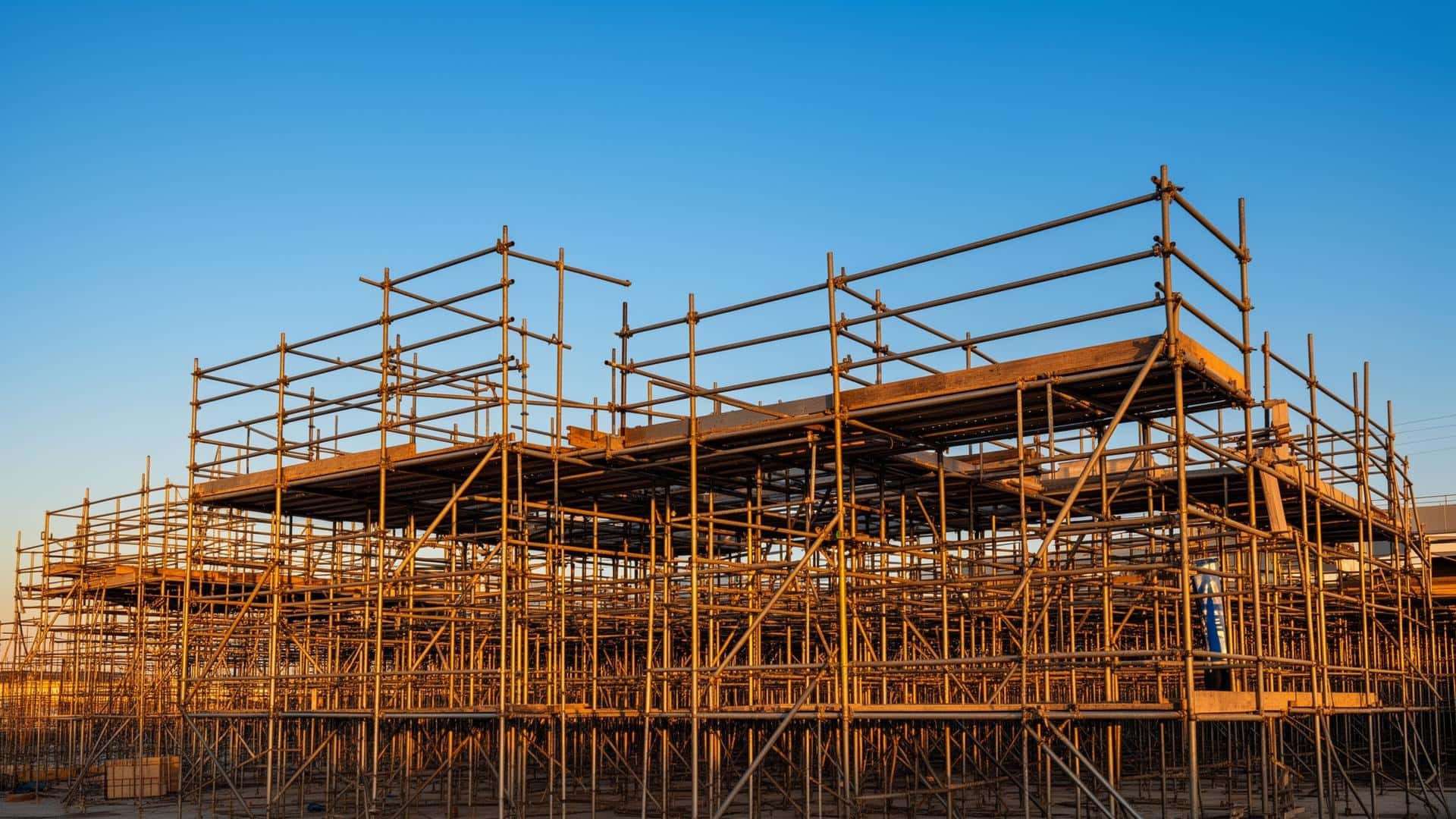
Types of Scaffolding Equipment
Explore all types of scaffolding equipment and systems used across the construction industry.
The right system for the structure
143Equipment types
9Categories
Scaffolding is not one product. A commercial re-clad, a refinery shutdown and a two-storey repaint each call for a different access system, and picking the wrong one costs erection hours, rental days and — on an inspected job — a citation. The categories below cover the systems in routine use on North American sites: supported frame and systems scaffold, suspended and motorised platforms, shoring, specialty access, and the fall protection that has to go with them.
Each guide explains what the equipment is, how it goes together, the loads and site conditions it suits, the OSHA and ANSI requirements that apply to it, and how it compares with the alternatives you were probably also considering. Where vendors on Scaffold Exchange carry the equipment, they are listed on the page so you can go straight from research to a quote.
Systems Scaffold
16 guidesCuplock Systems Scaffold
System scaffold that uses cup‑shaped nodes on the standards instead of rings, with ledgers locked in by top and bottom cups. It is durable, repetitive, and efficient for long runs and heavy duty support, commonly used on housing, bridges, tunnels, demolition, and viaduct projects where standardized bays are acceptable.
243 suppliersExcel Systems Scaffold
Excel Modular Systems Scaffolding is a proprietary modular system scaffold that uses a positive‑locking, no‑tools connection mechanism to speed up erection and dismantling while improving safety for erectors. It uses closely spaced connection points on the vertical legs (cups/attachment nodes at short intervals) to allow decks and ledgers to be set at many heights and in congested areas, providing high load capacity and reducing the amount of tube‑and‑clamp modification work needed on complex jobs.
43 suppliersLayher Allround Aluminum Systems Scaffold
The Layher Allround Aluminum Systems Scaffolding is an industry-benchmark modular system engineered specifically for demanding, complex applications where standard scaffolding falls short. Offering a blend of high durability and exceptionally low physical strain, the aluminum variant provides distinct benefits over traditional systems. 1. Ultra-Lightweight & Ergonomic Handling 2. Ingenious Connector Technology (Wedge-Lock & AutoLock) 3. Accelerated Assembly & Disassembly 4. Uncompromised Safety & Approvals
5 suppliersLayher Allround Systems Scaffold
Layher’s proprietary modular system scaffold (e.g., Allround) that uses ring‑based connection nodes and a wide catalog of specialty components. It is designed for fast assembly, complex geometry, and engineered industrial or infrastructure applications.
20 suppliersMonZon Protect It
6 suppliersNextGen Systems Scaffold
U.S.‑manufactured modular system scaffold families (such as Next Gen and Excel) that use positive‑locking, no‑tools connections on closely spaced nodes. They provide high load capacity, flexible deck heights, and reduced reliance on tube‑and‑clamp modifications on congested or irregular projects.
Peri Systems Scaffold
PERI’s proprietary system scaffold lines (such as PERI UP) that combine modular standards and ledgers with integrated safety features like advanced guardrail systems. They are often used on industrial and building projects where engineered designs and manufacturer support are important.
112 suppliersPinlock Systems Scaffold
Modular system scaffold that uses pin‑type connectors in a ring or node to lock ledgers and braces to vertical standards. It offers multi‑directional connections and behaves similarly to ringlock, providing fast assembly and good adaptability around complex structures.
506 suppliersProscaf Aluminum Systems Scaffold
Scaffold towers or frames made primarily from aluminum rather than steel, making them much lighter and easier to handle. They are commonly used where frequent relocation, low point loads, or corrosion resistance is important, with load ratings matched to lighter‑duty work.
1 supplierProScaf Systems Scaffold
Proscaf: 8- point ring system and simple-to-use components mean that scaffold structures can be erected much quicker, and with minimal labor, when compared to traditional systems. Additionally, the engineered components allow for efficiency in design for complex façade scaffolds. Base collars are used to ensure minimal labor is needed during base out. designed to be completed with one person. Integrated stair and ladder access systems save time and labor. Proscaf load bearing braces allow for bridging working platforms, reducing material and footprint on the ground. The requirement for additional materials e.g. ladder beams is removed. Wider planks (12.5″) and longer working bays mean less components are used in the scaffold, reducing time and build complexity. Folded steel toe-boards are lightweight, durable and simple to use simply lock in behind the wedge head. Tubular stiffeners underneath Proscaf planks ensure a solid, Bounce-free working platform, and also act as handles to aid install from the lift below.
1 supplierRinglock Systems Scaffold
System scaffold built around rosette “ring” nodes welded to the standards, allowing multiple ledgers and braces to connect at various angles. It is one of the most common modern systems because it erects quickly, handles complex shapes, and supports high loads for industrial, commercial, and infrastructure work.
553 suppliersSafway Systems Scaffold
BrandSafway’s proprietary modular system scaffold line that integrates with its stair towers, decks, and specialty access products. It is engineered for industrial and commercial projects where standardized, compatible components and formal design support are required.
132 suppliersSpeedyScaf Systems - By Layher
The Layher SpeedyScaf Scaffolding system is the industry-leading standard for frame (or insertion) scaffolding. Engineered specifically for facade work and professional building trades, its core philosophy centers around minimizing components to maximize assembly speed and site safety. 1. Minimalist "Speedy" Design. 2. Drastic Reductions in Labor Costs. 3. Integrated Safety Features/ 4. Lightweight Logistics Unmatched Investment Security & System Longevity Like all Layher systems, SpeedyScaf is designed with backward and forward compatibility in mind. New iterations or lightweight components mix seamlessly with older SpeedyScaf generations. Every part is hot-dip galvanized or crafted from high-grade aluminum, offering extreme resistance to weather and rough handling on-site. This durability safeguards your equipment assets for decades, yielding an exceptionally high return on investment (ROI).
4 suppliersSTAR Frame Systems Scaffold - By Layher
The Layher STAR Frame system represents a major evolutionary step in frame scaffolding, specifically designed to combine the rapid assembly speed of traditional frame scaffolding with the immense flexibility and safety of the modular Layher Allround system. It is engineered to offer high safety standards, lower labor costs, and seamless integration with existing inventory. 1. Superior Ergonomics and Weight Reduction 2. Rapid, Simple Assembly (The Speed of Frame Scaffolding) 3. Allround Compatibility & Flexibility 4. Advanced Safety-by-Design Inventory Optimization & Future-Proofing The ultimate value of the STAR Frame system lies in interoperability. If a company already owns Layher Allround components (such as ledgers, decks, or diagonals), they do not need to buy an entirely new eco-system. The STAR Frame integrates flawlessly with existing gear, maximizing the utilization rate of current inventory while offering a much faster facade-scaffolding alternative.
4 suppliersTube & Clamp Scaffold
Highly flexible scaffold built from individual steel tubes joined with right‑angle and swivel clamps, allowing ledgers, braces, and ties to be placed almost anywhere around the structure. It is slower to erect than frame or modular systems but is ideal for irregular layouts, tight spaces, and custom tie‑in or infill work.
553 suppliersWedgeLock Systems Scaffold
Legacy modular system scaffold that uses wedge‑type connections at fixed positions on the standards (typically orthogonal directions). It assembles faster than tube & clamp but offers less connection flexibility than newer ringlock‑style systems and is more common on older or long‑term customers’ fleets.
122 suppliers
Frame Scaffold
3 guidesFrame & Brace Scaffold - Aluminum
Aluminum Frame & Brace Scaffolding is a lightweight version of the standard frame-and-brace system, utilizing high-strength aluminum alloys instead of traditional steel. It consists of welded end frames connected by cross-braces to create a rigid, multilevel work platform.
98 suppliersFrame & Brace Scaffold - Steel
Standard frame‑and‑brace scaffold built from non‑proprietary welded end frames and cross‑braces, with planks or decks spanning between frames. It provides basic, economical access for low‑ and mid‑rise work where conventional frame scaffold is acceptable and no specific manufacturer system is required.
468 suppliersSafway OEM Frame & Brace Scaffold
BrandSafway’s proprietary frame‑and‑brace scaffold line, using standardized steel frames, braces, and decks compatible within the Safway system. It provides familiar, code‑compliant access for building façades and general construction where conventional frame scaffold is appropriate.
155 suppliers
Motorized Scaffolds
20 guidesAltrex Swing Stages
7 suppliersBeta Max Material Hoists
Bisomac Swing Stages
BMU - Building Maintenance Units
5 suppliersDavit - Permanent Rigging
8 suppliersGantries - Permanent
4 suppliersGantries - Temp
Hoists - Crew Elevators
Powered construction hoists designed and certified to carry workers and materials vertically along a mast or tower. They provide elevator‑style access to multiple levels of a building or scaffold, with enclosed cars and landing gates.
258 suppliersHoists - Materials Only
Mechanical hoists used only for lifting materials, tools, and small equipment between levels, not for passengers. They typically mount to a scaffold, structure, or mast and speed up vertical material handling on site.
302 suppliersModular Swing Stage Platforms
8 suppliersMonorail - Permanent
Monorail - Temp
4 suppliersRoof Anchors - Permanent
5 suppliersRoof Carriage Systems
1 supplierSelf Powered Platforms - Permanent
1 supplierSky Climber Swing Stages
Spider Swing Stages
Tractel Swing Stages
8 suppliersTrolley Hoist - Temp
4 suppliersWinsafe Swing Stages
5 suppliers
Shoring Equipment
8 guides10K Shoring Frame Equipment
Shoring Equipment is a variety of temporary structural supports used in construction to provide lateral or vertical stability to a building, trench, or other structure. Unlike scaffolding, which is primarily designed to support people and light tools, shoring is engineered to support immense loads—such as freshly poured concrete slabs, failing walls, or the earth surrounding an excavation.
266 suppliersForming Systems
4 suppliersModular Shoring Systems
2 suppliersPost Shores / Props
20 suppliersShoring & Reshoring - All Others
16 suppliersStructural Load Transfer Shoring
1 supplierSuspended Concrete Slab Shoring
Systems Scaffold Shoring
15 suppliers
Specialty Access Equipment
14 guidesSpecialized Scaffolding Equipment refers to engineered access solutions designed for complex environments where standard Frame & Brace Scaffolding or Systems Scaffolding cannot meet the project's technical, safety, or logistical requirements. While standard systems are designed for general-purpose vertical access on flat façades, specialized equipment is often purpose-built or highly modified to navigate irregular geometry, extreme heights, specific applications/trades, or unique hazards.
Bleachers & Seating
Temporary or semi‑permanent tiered seating structures built from scaffold or modular frames, designed to support spectators safely at events, stadiums, and venues.
131 suppliersCrane Loading Platforms - Manual
Crane Loading Platforms (also known as deck loading systems or crane decks) are temporary, cantilevered platforms that extend from the edge of a building's floor slab. These platforms create a secure "docking station" that allows crane operators to land heavy loads directly onto specific floors of a multi-story structure without the crane needing to reach inside the building.
54 suppliersCrane Loading Platforms - Powered
Powered Crane Loading Platforms (also known as motorized deck loading systems) are advanced, cantilevered staging areas that extend from the edge of a building’s floor plate. Unlike manual versions, these systems utilize electric or hydraulic motors to retract and extend the platform, allowing it to move in and out of the building structure with the push of a button.
30 suppliersCrank-Up Mason Scaffolding
Adjustable masonry platform system where work decks are cranked up or down along vertical towers as the wall rises. It keeps masons working at an ergonomic height, improves productivity, and reduces the need to rebuild conventional scaffold.
7 suppliersCrossover Platform Stairs
Rooftop Crossover Platforms (also known as bridge stairs or walkovers) are specialized Crossover Platforms designed to provide safe passage over obstacles on a roof or factory floor. These systems allow personnel to navigate over piping, conduit runs, cable trays, ductwork, or parapet walls without damaging the building’s infrastructure or risking injury.
59 suppliersFiberglass Access Systems
Fiberglass Access Equipment refers to a category of industrial ladders, work platforms, and scaffolding systems manufactured from Fiberglass Reinforced Polymer (FRP). These tools are specifically engineered for environments where traditional metallic equipment (like aluminum or steel) would pose a safety hazard or degrade quickly.
186 suppliersFRP Access Systems & Platforms
FRP (Fiberglass Reinforced Polymer) Access Systems and Platforms are high-performance structural solutions used to provide safe transit and working areas in environments where traditional materials like steel or aluminum would fail. These systems include FRP Access Systems & Platforms such as walkways, stairs, handrails, and ladders.
96 suppliersMast Climber Areial Platforms
Powered work platforms that travel up and down one or more vertical masts anchored to the structure. They offer large, adjustable decks for façade work and heavy masonry, combining high load capacity with precise height control.
199 suppliersSafeSmart AdaptaStep - Aluminum
SafeSmart AdjustaStairs - Aluminum
The OSHA compliant design of AdjustaStairs offers the convenience and practicality of permanent stairs in situations where an extension ladder or wood-built ladders and or scaffold stair towers is necessary. The stair systems are equipped with self-levelling steps that allow you to stand on a level tread even when the unit is placed at different angles ranging from 25° to 55°. Moreover, the unit can be easily transported as the collapsible handrails and auto-folding steps within the side rails allow the unit to pack down flat in one swift movement.
3 suppliersSafeSmart Z-Stack Stair Towers - Aluminum
Z-Stack Stair Towers are a specialized modular vertical access solution used in the construction industry to provide safe, efficient, and high-capacity movement for workers between different levels of a project. Unlike standard ladders or narrower scaffolding stairs, the "Z-stack" configuration typically features a zig-zagging stair pattern within a single bay, allowing for continuous upward travel without the need to exit the tower at every level.
1 supplierStep Ladders - Aluminum
13 suppliersStep Ladders - Fiberglass
12 suppliersTie Down Super Steps
Fall Protection Systems
11 guidesAdvanced Guardrail System
1 supplierEdge Protection
Collective fall‑protection systems installed at slab edges, roof perimeters, openings, or exposed sides, typically using posts with guardrails or mesh panels. They are designed to prevent workers or materials from falling from the edge, often as an alternative or complement to personal fall‑arrest systems.
231 suppliersEngineered Edge Protection
In the construction industry, Engineered Edge Protection refers to a comprehensive fall-prevention system designed to secure the perimeters of a structure during various stages of building. Unlike improvised wooden guardrails, these systems are pre-engineered to meet specific structural load requirements and safety standards (such as OSHA or IBC). Core Components and Functionality These systems are typically installed at slab edges, roof perimeters, floor openings, or stairwells. They serve as a collective protection measure, meaning they protect everyone in the vicinity without requiring individual workers to be "tied off" to a personal fall arrest system.
204 suppliersMobile Fall Protection Systems
1 supplierNon-Penetrating - Mobile Fall Protection
1 supplierPanel Edge Protection
1 supplierPenetrating - Mobile Fall Protection
1 supplierSafety Rail Systems
In the construction industry, Safety Rail Systems are a form of collective fall protection designed to provide a physical barrier between workers and fall hazards. Unlike personal fall arrest systems (like harnesses), safety rails protect everyone in the work area automatically without requiring specialized training or individual equipment.
321 suppliersSlab Grab Guardrails
Slab Grab Guardrails (often called slab edge clamps) are a specialized type of Engineered Edge Protection used primarily during the concrete-forming and steel-erection phases of high-rise construction. They are designed to "grab" onto the edge of a newly poured concrete slab or a structural beam to provide a secure anchor point for a safety rail system.
184 suppliersUniversal Guardrail Systems - Temp
1 supplierWebRail Edge Protection
1 supplier
Project Types
42 guidesSearching by Project Type acts as a strategic shortcut for determining the most efficient equipment, as it aligns the structural requirements of a trade with the mechanical capabilities of a specific scaffold system. Rather than browsing a broad inventory, this approach filters for "best-fit" solutions based on the unique demands of the environment:
24/7 Scaffold Services
24/7 Shoring Services
Access Walkways & Platforms
In the construction industry, Access Walkways and Platforms are essential components of a safety and logistics plan, providing stable, temporary surfaces for personnel to move across a jobsite or perform work at height. While often integrated with scaffolding, they can also exist as standalone systems to navigate complex terrains or rooftops.
443 suppliersADA Compliant Ramp, Stairs & Bridges
ADA Compliant Ramp, Stairs & Bridges are essential for ensuring that public spaces are inclusive and safely accessible to individuals of all mobility levels. By adhering to specific slope, width, and handrail requirements, these structures remove physical barriers that would otherwise prevent people using wheelchairs, walkers, or strollers from navigating a site.
180 suppliersAdjustable Construction Stairs
3 suppliersBuck Hoists
114 suppliersCleanroom Access Equipment
Cleanroom Access Equipment refers to a specialized category of ladders, work platforms, and scaffolding systems engineered to meet the strict air quality and contamination control standards of controlled environments. Unlike standard construction equipment, Cleanroom Access Equipment is manufactured from materials that do not "off-gas," shed particulates, or harbor microbial growth.
145 suppliersConcert & Event Staging
6 suppliersCrane Base Enclosures
112 suppliersCustom Stairs & Ramps - Steel
1 supplierCustom Stairs & Ramps - Aluminum
2 suppliersDebris Containment Netting - Exterior Building
Building Containment Netting Systems are protective mesh barriers installed around the perimeter of a construction or demolition site. These systems are designed to wrap the building’s exterior, creating a vertical "envelope" that secures the workspace from the surrounding environment.
175 suppliersDebris Net Catch Fan Netting
1 supplierDebris Net Perimeter Fan Netting
Perimeter Fan Netting, also known as Catch Fans, is a specialized horizontal safety system designed to capture falling objects and, in some engineered cases, provide a secondary fall arrest for personnel. Unlike vertical debris netting that wraps around the face of a scaffold, fan netting cantilevers outward from the building or scaffold structure to create a protective "shelf." The term "Fan" refers to the system’s ability to be folded upward against the building facade when not in use, during high-wind events, or to allow for crane clearances.
131 suppliersEmergency Scaffold Services
1 supplierEmergency Shoring Services
1 supplierExcavation Stair Access Systems
1 supplierFilm & TV Production
1 supplierHeight Adjustable Construction Stairs
1 supplierIBC Compliant Ramps, Stairs, & Bridges
IBC, (formally UBC) Compliant Ramps, Stairs, & Bridges are temporary or permanent access structures designed to meet the rigorous safety and structural standards set by the International Building Code (IBC). Unlike systems designed solely for worker access, IBC-compliant systems are engineered to handle the specific load requirements, handrail heights, and egress widths necessary for the general public.
173 suppliersMotorized Scaffold Services
General term for powered access systems in which the work platform itself moves vertically using motors or hoists, rather than workers climbing fixed ladders. It includes mast climbers, motorized platforms, and similar systems that provide faster, less labor‑intensive vertical access than traditional scaffold.
225 suppliersPlastic Enclosures - Exterior Building
Plastic Building Enclosures (often referred to as scaffold encapsulation or shrink wrap systems) are high-strength, weather-resistant plastic membranes used to completely seal a construction or renovation site. Unlike porous Scaffold Netting, these enclosures create a solid, impermeable barrier that isolates the interior workspace from the external environment.
256 suppliersProject Site Perimeter Fencing
Construction Site Perimeter Fencing is a temporary physical barrier installed to define the boundaries of a jobsite and restrict access. These systems can range from standard chain-link fences and privacy-screened panels to heavy-duty Site Perimeter Fencing designed to withstand high winds and impact.
83 suppliersPublic Access Systems
Code‑compliant temporary walkways, ramps, stairs, and platforms assembled from scaffold or proprietary modules to move the general public safely through, around, or into a site or event.
207 suppliersRolling Scaffolds - Frame & Brace
Rolling Scaffolds (Systems) are mobile, high-capacity work platforms built using modular Systems Scaffolding components, such as Ringlock or Cuplock. By equipping the vertical standards with heavy-duty, height-adjustable locking casters, a rigid system tower can be moved manually across a jobsite without being dismantled.
361 suppliersRolling Scaffolds - Systems
Rolling Scaffolds (Frame & Brace) are mobile work platforms created by adding heavy-duty, locking casters to the base of a standard Frame & Brace Scaffolding tower. These systems allow a fully assembled scaffold to be moved manually across a smooth, level floor, eliminating the need to dismantle and rebuild the structure every time the work area shifts.
441 suppliersRooftop Stairs & Walkways
1 supplierShrink Wrap - Building / Structural Containment
1 supplierSidewalk Sheds And Canopies
Overhead protection structures (sidewalk sheds) erected above sidewalks or building entrances to catch falling debris and provide protected pedestrian passage during construction or façade work.
368 suppliersStair Towers - Frame & Brace
Stair Towers (Frame & Brace) are pre-engineered vertical access solutions built using standard Frame & Brace Scaffolding components. By integrating specialized internal stair units, landings, and handrails into a standard scaffold bay, these towers provide a structured, staircase-style alternative to traditional vertical ladders.
293 suppliersStair Towers - Permanent Aluminum
Permanent Aluminum Construction Stair Towers are engineered, high-strength vertical access systems designed for long-term or permanent installation in industrial, commercial, and coastal environments. Unlike temporary scaffolding, these towers are fabricated from structural-grade aluminum to provide a lightweight, maintenance-free alternative to traditional steel or wood access structures.
15 suppliersStair Towers - Permanent Steel
Permanent Steel Construction Stair Towers are heavy-duty, factory-fabricated vertical access systems designed to be integrated into a building's permanent structure or used as long-term industrial access. Unlike temporary modular systems, Stair Towers - Permanent Steel are built to meet specific building codes and provide a durable, high-traffic solution for both workers and the general public.
14 suppliersStair Towers - Systems Scaffold
Systems Scaffold Stair Towers are pre-engineered vertical access structures built using modular components from a Systems Scaffolding line (such as Ringlock or Cuplock). Unlike traditional ladders, these towers provide a wide, rigid staircase with integrated landings, allowing workers to move between levels with both hands free.
471 suppliersSuspended Scaffolding
Suspended Scaffolding as defined by OSHA consists of one or more platforms supported by ropes or other non-rigid means from an overhead structure. A specific and unique type of suspended system is the Needle Beam Scaffold, which consists of a platform supported by two parallel horizontal beams (the "needle beams") that are themselves hung by ropes or cables.
397 suppliersSwing Stage Scaffolding
Tube‑and‑clamp scaffold provided without commitment to a specific manufacturer or proprietary fitting style. This flag indicates the company supplies or installs standard tube‑and‑clamp systems for custom or complex access where other scaffold families will not fit.
350 suppliersTemporary Construction Stairs
3 suppliersTemporary Stair Guardrail System
Temporary Stair Guardrail Systems are specialized safety barriers designed to provide fall protection specifically for stairwells during the construction or renovation phase of a building. Unlike standard perimeter guardrails, these systems are engineered to follow the pitch and angle of a staircase, providing a continuous handrail and mid-rail for workers moving between levels.
201 suppliersTent & Roofing Systems
Trash Chutes - Plastic
Modular plastic chute sections hung from a structure or scaffold to channel construction debris safely from elevated levels into dumpsters or collection bins. They are lighter, quieter, and easier to handle than steel chutes and are common on renovation and light‑duty jobs.
293 suppliersTrash Chutes - Wood
Heavier‑duty or site‑built debris chutes constructed from timber and/or steel funnels to handle rough, heavy, or abrasive demolition waste. They are typically custom‑framed on site and used where plastic chutes would wear out too quickly or where large debris pieces are expected.
92 suppliersUnder Bridge / Large Area Work Platforms
Under Bridge / Large Area Platforms are specialized, high-capacity Suspended Scaffolding systems designed to provide expansive, stable working surfaces beneath bridge decks, viaducts, and other large overhead structures. Unlike narrow swing stages, these platforms can span the entire width of a bridge, allowing multiple crews to work simultaneously.
229 suppliersUnder Bridge Debris Netting Systems
Under Bridge Netting Systems are specialized containment barriers installed beneath the decks of bridges and overpasses to catch falling materials. These systems are critical during structural maintenance, rehabilitation, or demolition projects where the area beneath the bridge remains active with vehicle traffic, pedestrian walkways, or sensitive waterways.
140 suppliers
Product Sales
28 guidesScaffold Accessories & Products represent a diverse "catch-all" category of essential hardware that does not fit into a single structural classification (like a frame or a motor) but is instrumental in transforming a raw pile of metal into a safe, OSHA-compliant work platform. While a Ringlock Systems Scaffolding rosette provides the connection, it is the accessories that provide the stability, safety, and precision required for the job.
Aluminum Mobile Scaffolding
Aluminum Mobile Scaffolding, often referred to as rolling towers, consists of lightweight scaffold frames equipped with casters at the base. These systems are designed for tasks that require frequent repositioning and a stable, elevated work platform that can be moved manually by a single person.
179 suppliersAluminum Pick-Boards / Stage Plank
Aluminum Pick-Boards, also known as Stage Planks, are lightweight, structural platforms used to bridge the gap between two supports—such as Frame & Brace Scaffolding, Ladder Jacks, or Swing Stage Scaffolding. They provide a long, continuous walking and working surface for tasks that require horizontal movement across a large area.
302 suppliersAluminum Scaffold Planks
Lightweight aluminum scaffold decks, typically with baked‑in anti‑slip surfaces and integrated hooks or end fittings. They replace wood planks to reduce weight, improve durability, and provide more consistent span and load ratings.
399 suppliersBaker Scaffolding
Baker Scaffolds, also known as multipurpose or utility scaffolds, are a narrow-frame Aluminum Mobile Scaffolding system designed for interior use. These units typically consist of two end frames connected by two side trusses that support a wooden or metal platform, all mounted on heavy-duty locking casters.
238 suppliersCustom Printed Banners
Custom Printed Mesh Banners are large-format, high-visibility signage solutions constructed from a durable, perforated polyester material. These banners are designed to transform construction sites and large structures into branding opportunities while maintaining safety. By integrating full-color graphics with a "blow-through" mesh design, they allow wind and light to pass through, making them the industry standard for outdoor scaffolding and perimeter fencing.
11 suppliersMini-Mobile Scaffolds
Mini-Mobile Scaffolds are compact, lightweight versions of traditional rolling towers, typically designed for low-to-medium height tasks. These units are characterized by their smaller footprint and are often foldable or collapsible, making them easy to transport in a standard vehicle and store in tight spaces.
145 suppliersNetting - Bird Netting
Bird Netting is a specialized, lightweight mesh barrier designed to physically exclude birds from specific areas without causing them harm. Unlike Scaffold Netting or Debris Netting, which are designed to contain construction materials, bird netting is engineered with specific aperture (hole) sizes tailored to prevent various bird species from passing through or nesting.
34 suppliersNetting - Boiler Scaffold Fall Netting
1 supplierNetting - Custom Safety Nets
Custom Safety Nets are specialized, high-tenacity mesh systems engineered to fit the unique dimensions and structural requirements of a specific jobsite. Unlike standard "off-the-shelf" netting, Custom Safety Netting is manufactured to precise specifications regarding mesh size, border rope strength, and overall geometry to ensure a perfect fit for irregular or complex structures.
184 suppliersNetting - Debris Fan / Catch Netting
Fan netting, often referred to as perimeter safety fans or catch fans, is a specialized fall protection and debris containment system used primarily on high-rise construction projects. Unlike standard vertical netting that wraps around a scaffold, fan netting consists of high-tenacity mesh attached to a rigid, cantilevered frame that extends horizontally outward from the building or scaffold. The name "fan" comes from the way the systems are often designed to fold upward when not in use or during high winds, resembling a folding fan.
148 suppliersNetting - Debris Netting
Debris Netting is a specialized, durable mesh barrier designed to contain and control falling materials on a construction or demolition site. Often manufactured from high-density polyethylene (HDPE) or high-tenacity synthetic fibers, it serves as a vertical or horizontal shield that encloses work areas to protect the surrounding environment.
291 suppliersNetting - Personnel Fan / Catch Netting
1 supplierNetting - Personnel Safety Nets
Personnel Safety Nets are high-strength, flexible mesh systems designed to catch a worker in the event of a fall. As a form of collective fall protection, these nets are engineered to withstand the significant impact force of a human body, providing a "passive" safety layer that works without the user needing to manually tie off to an anchor point.
199 suppliersNetting - Printed Mesh Banners
Printed Mesh Banners are specialized large-format signage solutions made from perforated polyester material. Unlike solid vinyl banners, mesh banners feature thousands of tiny holes that allow air and light to pass through the fabric, making them the industry standard for high-wind environments and large-scale building wraps.
16 suppliersNetting - Privacy Netting
Privacy Netting is a specialized, high-density mesh material used to enclose a jobsite or scaffold structure. While similar in construction to Debris Netting, it is specifically engineered with a tighter weave to significantly reduce visibility into the workspace.
172 suppliersNetting - Scaffold Netting
Scaffold Netting is a specialized, lightweight mesh material primarily used to wrap the exterior of a scaffold structure. Often referred to as debris or safety netting, it is designed to create a vertical barrier between the work zone and the surrounding environment, particularly in high-density urban areas
312 suppliersOSHA Wood Scaffold Planks
Graded timber boards used as walking and working surfaces on scaffold frames or systems. They must meet specific scaffold plank standards for span, thickness, and load capacity and are regularly inspected for damage, splits, or excessive wear.
310 suppliersPump Jacks
In the world of residential construction and remodeling, efficiency often comes down to how easily you can move. For projects like siding installation, painting, or window replacement, traditional scaffolding can be bulky and time-consuming to reset. Enter the pump jack, a unique, adjustable scaffolding system designed to move with the worker. A pump jack is a portable scaffolding device that uses a manual foot-pump mechanism to "climb" up and down vertical poles. The system typically consists of: Vertical Poles: Usually made of wood (typically two 2x4s spiked together) or specialized aluminum. The Pump Jack Mechanism: A metal bracket that slides over the pole. A Workbench/Platform: Brackets that hold the walk planks (where the worker stands) and a separate, higher platform for tools and materials. Braces: Used to secure the poles to the structure for stability.
65 suppliersRent Forklifts & Reach Lifts
Truck and Forklift Rentals involve the short-term or long-term leasing of specialized vehicles and material handling equipment. In the construction and industrial sectors, Rent Trucks & Forklifts provide the logistical backbone for moving heavy materials, scaffolding components, and personnel across a jobsite or between various project locations.
25 suppliersScaffold 3D Design Software
1 supplierScaffold Estimating Software
Scaffold Inventory Software
Scaffold Plastic Sheeting
Scaffold Sheeting is a heavy-duty, reinforced plastic film designed to fully encapsulate a scaffold structure. Unlike Scaffold Netting which is porous, sheeting is typically a solid, weather-resistant material (often made of reinforced polyethylene) that creates a watertight and airtight seal around the workspace.
309 suppliersScaffold Site Management Software
Scaffold Wrap Sheeting
1 supplierShrink Wrap - Commercial
3 suppliersShrink Wrap - Industrial
Shrink Wrap Structure Enclosures are a high-performance form of building encapsulation that uses specialized, heat-sensitive polyethylene film to create a drum-tight, seamless barrier around a scaffold or structure. Unlike traditional Scaffold Sheeting or Building Plastic Enclosures that are tied or fastened manually, shrink wrap is heated with a propane-fired tool, causing the plastic to contract and mold perfectly to the shape of the frame.
202 suppliersWeather Protection Plastic Sheeting
Weather Protection Plastic Sheeting is a durable, heavy-duty protective barrier designed to shield construction sites, materials, and workers from the elements. While often used as a standalone cover, it is frequently integrated with scaffolding to create a secure, weatherproof envelope around a building during construction or renovation.
283 suppliers
Other types of equipment
1 guideEquipment & Project Types
Systems Scaffolding (also known as modular scaffolding) is a modern vertical access solution composed of prefabricated components—primarily vertical "standards," horizontal "ledgers," and diagonal braces—that lock together using standardized connection points. Unlike traditional Tube & Clamp Scaffolding, which requires manual measuring and clamping at every joint, systems scaffold uses fixed connection nodes (such as "rings" or "cups") welded at regular intervals. Common examples include Ringlock Systems Scaffolding, Cuplock Systems Scaffolding, and brand-specific lines like Layher Systems Scaffolding.
Not sure which system fits the job? Start from the work itself — height, duration, load, surface and who has to stand on it — and the shortlist usually narrows to two. The comparison section inside each guide covers the rest.