
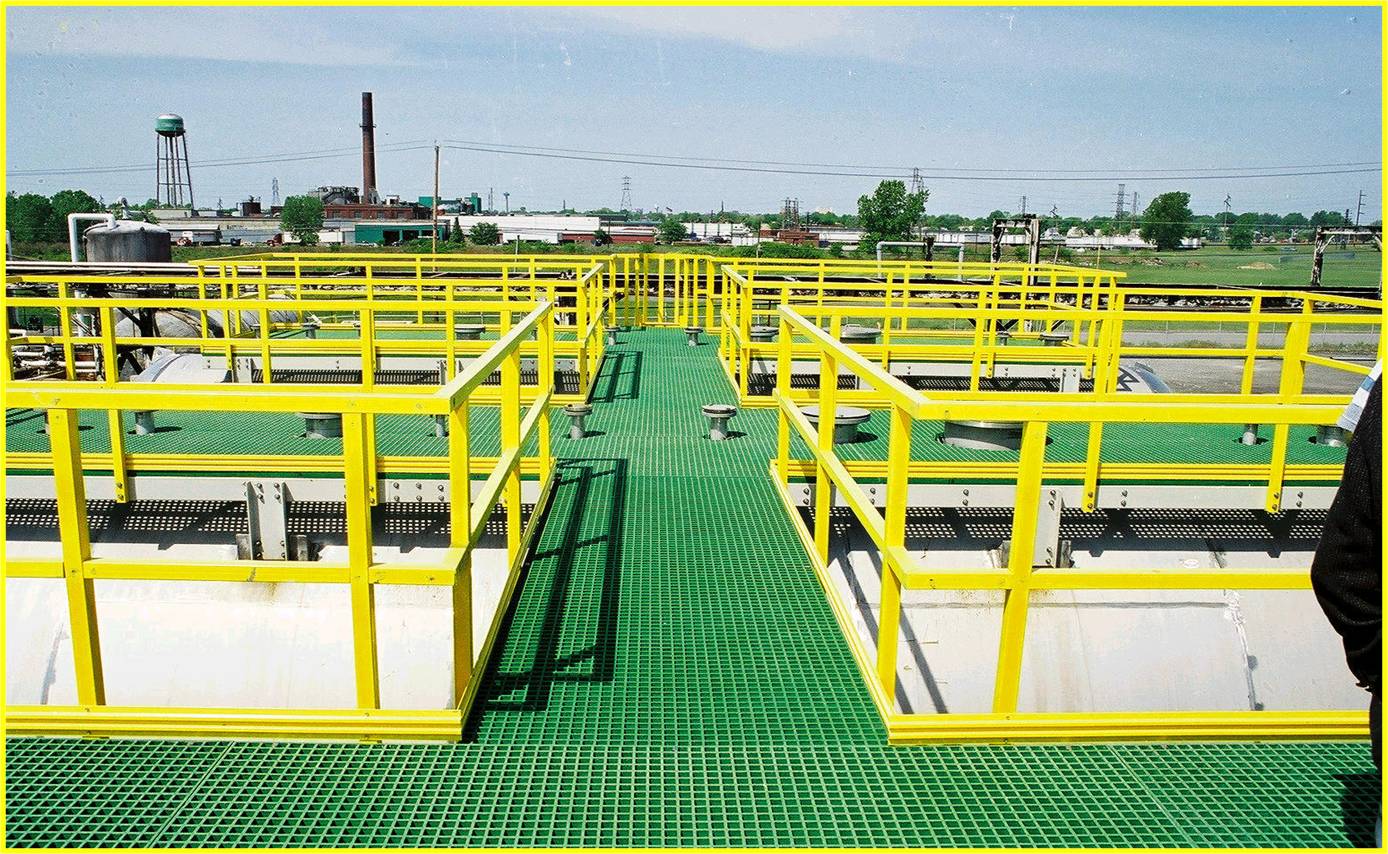
FRP Access Systems & Platforms
Fiberglass-reinforced plastic platforms, walkways, stair systems, and structural access equipment engineered for corrosive, electrically hazardous, or weight-sensitive environments where steel and aluminum fall short. Find FRP access system vendors near you through Scaffold Exchange.
What Are FRP Access Systems & Platforms?
Definition: FRP (Fiberglass Reinforced Plastic) access systems and platforms are a broader category of structural access equipment — walkways, stair systems, work platforms, handrails, and grating — manufactured from pultruded fiberglass composite rather than scaffolding-specific FRP tube systems. While fiberglass scaffolding focuses on temporary, reconfigurable access for maintenance and construction tasks, FRP access systems and platforms extend the same non-conductive, corrosion-resistant material into semi-permanent and permanent structural applications: catwalks, mezzanines, platform decks, and permanent stair and handrail systems engineered around fixed equipment.
FRP is produced by pultruding continuous fiberglass reinforcement through a thermoset resin matrix, producing structural shapes — I-beams, channels, grating panels, angles, and rod stock — with a strength-to-weight ratio that rivals or exceeds structural steel for many applications, at a fraction of the weight. This makes FRP platforms practical in locations where load limits on existing structures restrict the use of heavier steel platforms, or where the platform itself must be transported and installed without crane access.
Because FRP shares the same intrinsic non-conductivity and corrosion resistance as fiberglass scaffolding, FRP access systems and platforms are widely specified for permanent and semi-permanent installations in chemical processing plants, water and wastewater treatment facilities, offshore platforms, and any environment with persistent exposure to moisture, chemicals, salt air, or electrical hazards that would degrade a steel structure over its service life. Through Scaffold Exchange, you can find vendors across the U.S. who carry FRP access systems and platforms and compare their inventory, rental rates, and availability in your area.
Common Types of FRP Access Products
FRP access systems span a range of product categories, each engineered for a specific structural access need.
Molded & Pultruded Grating
Anti-slip fiberglass grating panels used as decking for walkways, platforms, and mezzanines. Resists chemical attack and UV degradation while providing secure footing in wet or oily environments.
FRP Stair Systems
Pultruded stair stringers, treads, and landings for permanent or semi-permanent vertical access around tanks, equipment, and process structures in corrosive or electrically hazardous environments.
Catwalks & Elevated Walkways
Structural FRP walkway systems providing safe crew access across or alongside process equipment, tanks, and piping runs, supported on FRP or hybrid steel-FRP framing.
Handrail & Guardrail Systems
FRP handrail components — posts, top rails, mid-rails, and toe boards — engineered to meet the same OSHA height and strength requirements as metal guardrails, in a non-conductive, corrosion-resistant material.
Structural Shapes & Framing
Pultruded I-beams, channels, angles, and rod stock used to build the supporting frame of a platform or walkway, offering a strength-to-weight ratio competitive with structural steel.
Equipment-Specific Access Platforms
Custom-engineered FRP platforms built around specific tanks, vessels, or process equipment, providing a permanent maintenance and inspection access point without the corrosion liability of steel.
Key Advantages of FRP Access Systems
FRP delivers performance and lifecycle advantages over steel and aluminum in the demanding industrial environments where it's most commonly specified.
Non-Conductive
Intrinsically non-conductive, eliminating the risk of electrical current passing through the structure — a critical safety property near energized equipment, substations, and high-voltage installations.
Chemical & Corrosion Resistant
Resists attack from acids, chemicals, salt air, and moisture far better than steel, dramatically extending service life in water treatment, chemical processing, and marine environments.
High Strength-to-Weight Ratio
Significantly lighter than equivalent structural steel while maintaining comparable load capacity, reducing the structural burden on supporting equipment and simplifying installation logistics.
Low Maintenance, Long Service Life
Requires no painting, galvanizing, or corrosion treatment over its service life, and end-of-life FRP material can be recycled, supporting sustainability goals on long-term industrial assets.
Common Applications & Job Site Uses
FRP access systems and platforms are specified across industries where corrosion, electrical hazard, or load-weight constraints make steel an impractical or costly long-term choice.
Water and wastewater treatment facility walkways and platforms
Chemical and petrochemical processing plant access
Offshore platforms and marine structures
Electrical substation and high-voltage facility platforms
Pulp and paper mill equipment access
Tank farm and storage vessel access platforms
Mining and mineral processing facility walkways
Cooling tower and power generation facility access
FRP Access Systems vs. Other Materials
FRP fills a specific structural niche driven by corrosion and electrical safety requirements. Here is how it compares to other common access materials.
Permanent/semi-permanent FRP structures
- Non-conductive and chemically inert
- Strength-to-weight rivals structural steel
- No corrosion treatment required over service life
- Higher material cost than steel, lower lifecycle cost
Temporary non-conductive scaffolding
- Same FRP material, scaffold-specific tube components
- Temporary, reconfigurable structure
- Designed for maintenance and construction tasks
- Faster to deploy and relocate than fixed FRP platforms
Standard structural steel access
- Lower upfront material cost
- Conductive — unsuitable for electrical hazard areas
- Requires ongoing corrosion maintenance
- Heavier — higher structural load on supporting equipment
Lightweight metal access
- Lighter than steel, but still conductive
- Naturally corrosion resistant, but less than FRP
- Lower cost than FRP for non-electrical applications
- Not suitable for live electrical work environments
Find FRP Access System Vendors Near You
Use the Scaffold Exchange map to search by location, filter by equipment type, and connect directly with local suppliers who carry FRP access systems and platforms.
OSHA Compliance & Safety Standards
FRP access systems and platforms used on U.S. job sites must comply with OSHA's general industry and construction walking-working surface requirements under 29 CFR 1910 Subpart D and 29 CFR 1926 Subpart M, including platform load capacity, guardrail height and strength, and stair and ladder access requirements. Where the platform serves work near energized electrical equipment, OSHA's electrical safety requirements under Subpart K also apply. Always confirm the platform's structural design load and any dielectric certification matches the actual site conditions and equipment loads.
- Platform load capacity verified against the manufacturer's structural design rating
- Guardrails on all open sides and ends per applicable fall protection standards
- Mid-rails and toe boards installed per OSHA height and strength requirements
- Anti-slip grating surface verified and maintained free of debris buildup
- Dielectric certification confirmed for installations near energized equipment
- Structural connections and supports inspected for damage or degradation
- Stair and ladder access components meet applicable Subpart X requirements
- System inspected by a competent person on a scheduled maintenance basis
1910 / 1926
Walking-Working Surfaces, U.S. Regulations
OSHA Interpretations & Rulings →