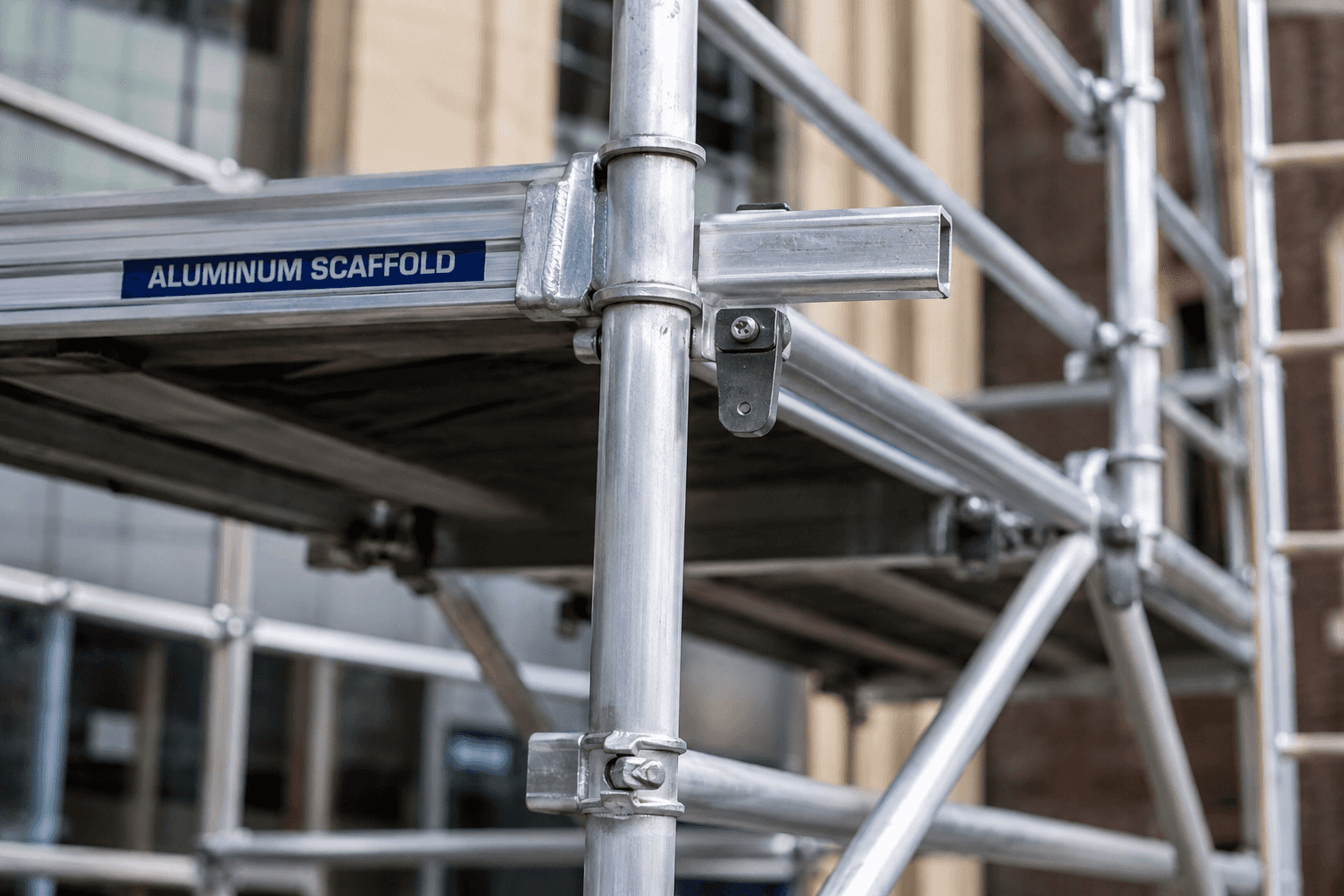
What Is Aluminum Systems Scaffolding?
Definition: Aluminum systems scaffolding is a category of modular scaffold systems — including rosette-based, ringlock-type, and other system connection methods — where the primary structural components are manufactured from high-strength aluminum alloy rather than steel. These systems use the same modular connection principles as steel system scaffolding but deliver 40 to 50 percent weight savings, natural corrosion resistance, and a service life of 20 to 30 years or more, making them the preferred system for applications where weight, portability, and durability in harsh environments are all critical requirements.
Aluminum systems scaffolding is a distinct category from aluminum frame-and-brace scaffolding. Frame scaffolding uses prefabricated walk-through panels in fixed configurations — lightweight, but limited in geometry. Aluminum systems scaffolding uses the same modular rosette, wedge, or cup connection methods found in steel system scaffolding — Ringlock, Wedgelock, Cuplock, and compatible systems — but in aluminum construction. This combination delivers system-level configuration flexibility with the weight and corrosion advantages of aluminum: the ability to conform to complex structures, curved facades, and irregular geometries, without the weight burden of an equivalent steel system.
Key systems in this category include Layher Allround Aluminum, ProScaf Aluminum, APM System, and a range of compatible modular aluminum scaffold systems available through vendors in the United States. Through Scaffold Exchange, you can find vendors across the U.S. who carry aluminum systems scaffolding and compare their inventory, rental rates, and availability in your area.
Key Advantages of Aluminum Systems Scaffolding
Aluminum systems scaffolding delivers measurable performance advantages over steel system scaffolding in applications where weight, handling efficiency, corrosion resistance, and long-term value are priorities.
40–50% Weight Reduction
Aluminum components weigh approximately 40 to 50 percent less than equivalent steel components. This reduces transport costs, labor hours for handling and erection, and physical strain on crews across the project duration.
Natural Corrosion Resistance
Aluminum naturally resists rust and corrosion without coatings or ongoing maintenance. This makes aluminum systems the preferred choice for coastal, marine, offshore, and high-humidity environments where steel systems require regular inspection and treatment.
Crane-Able Structures
The reduced weight of aluminum systems makes pre-assembled crane-able scaffold structures practical — a 30-meter aluminum scaffold bridge can weigh under 4,000kg, making it feasible to lift and position complete assemblies by crane, dramatically reducing on-site erection time.
20–30 Year Service Life
High-grade aluminum alloy components can deliver 20 to 30 years or more of service life in regular use, with lower maintenance requirements than equivalent steel systems, providing strong long-term return on inventory investment.
Key Components of Aluminum Systems Scaffolding
Aluminum systems scaffolding uses the same component categories as steel system scaffolding — standards, ledgers, braces, base jacks, and deck planks — with all primary structural members manufactured from high-strength aluminum alloy. Connection methods vary by system type but follow the same rosette, wedge, or cup principles as their steel equivalents.
Aluminum Standards (Verticals)
High-strength aluminum alloy uprights with connection nodes — rosette rings, cup nodes, or compatible connection points — at regular intervals. Significantly lighter than steel equivalents while maintaining high load-bearing capacity.
Ledgers & Transoms
Horizontal members with connection heads matched to the system type — wedge heads for rosette systems, blade heads for cup systems. Available in a range of lengths to suit the project bay configuration.
Diagonal Braces
Aluminum bay braces providing lateral stability and resistance to sway. In high-load systems such as ProScaf Aluminum, diagonal braces may be rated as load-bearing members for cantilevered and specialty configurations.
Adjustable Base Jacks
Screw-type leveling jacks — available in aluminum or steel — at the base of each standard. Allow the system to be leveled on uneven, sloped, or soft ground without shimming or custom fabrication.
Aluminum Deck Planks
Lightweight aluminum decking that spans between ledgers to form the working platform. Non-corrosive, non-slip, and significantly lighter than steel decks — further reducing the total system weight on site.
Stair Towers & Beams
Purpose-designed aluminum stair stringers, treads, and lattice or truss beams that integrate with the primary system components to provide safe crew access and long-span bridging capabilities.
Common Applications & Job Site Uses
Aluminum systems scaffolding is particularly well suited for applications where the combination of system-level flexibility, high load capacity, and light weight is required simultaneously — applications that neither standard aluminum frame scaffolding nor steel system scaffolding can fully optimize.
Coastal, marine, and offshore construction and maintenance
Aviation and aerospace maintenance hangar access
Crane-able pre-assembled scaffold structures
Complex commercial and industrial facade access
Event staging, exhibitions, and public access structures
Shipbuilding and ship repair access
Industrial plant maintenance in corrosive environments
Long-span bridging and temporary pedestrian structures
Aluminum Systems vs. Steel Systems vs. Aluminum Frame
Understanding where aluminum systems scaffolding fits relative to other scaffold types is key to choosing the right system for your project.
Lightweight prefabricated panels
- Fixed frame geometry — standard configurations only
- Lightest and fastest for routine work
- Lower load capacity than aluminum systems
- Best for interior and residential projects
Steel 8-hole rosette modular system
- Higher load capacity than aluminum systems
- 40–50% heavier — more labor to handle
- Susceptible to corrosion without maintenance
- Lower upfront cost than aluminum equivalent
Steel rosette-and-wedge system
- Same wedge connection — heavier than aluminum
- Higher raw load capacity per component
- Requires corrosion maintenance in harsh environments
- Most common steel system type in the U.S.
Proprietary high-load aluminum system
- Load-bearing braces for cantilever applications
- 46% weight savings vs. ProScaf steel
- SmartBridge: 30m span at only 3,600kg
- Full component traceability and QC
Lightweight modular system category
- 40–50% lighter than steel system equivalents
- Natural corrosion resistance
- 20–30 year service life
- Best for coastal, aviation, and crane-able structures
Find Aluminum Systems Scaffolding Vendors Near You
Use the Scaffold Exchange map to search by location, filter by equipment type, and connect directly with local suppliers who carry aluminum modular system scaffolding.
OSHA Compliance & Safety Standards
Aluminum systems scaffolding used on U.S. job sites must comply with OSHA standard 29 CFR 1926.451, which governs all supported scaffold systems in construction. The lighter weight of aluminum components does not reduce compliance requirements — all guardrail, mid-rail, toe board, and base jack requirements apply equally to aluminum systems. Always verify the load rating of your aluminum system components before use, configure per the manufacturer's load tables, and do not mix aluminum and steel components from different systems without explicit manufacturer approval.
- All connections fully locked and inspected before loading
- Guardrails on all open sides and ends above 10 feet
- Mid-rails at the midpoint between top rail and platform surface
- Toe boards installed to prevent falling tools and materials
- Base jacks and mudsills used on all vertical standards
- Load ratings verified against manufacturer's tables — do not exceed rated capacity
- Scaffold inspected by a competent person before each work shift
- Do not mix aluminum and steel components without manufacturer approval
1926.451
Supported Scaffolds — U.S. Construction Regulations
OSHA Interpretations & Rulings →