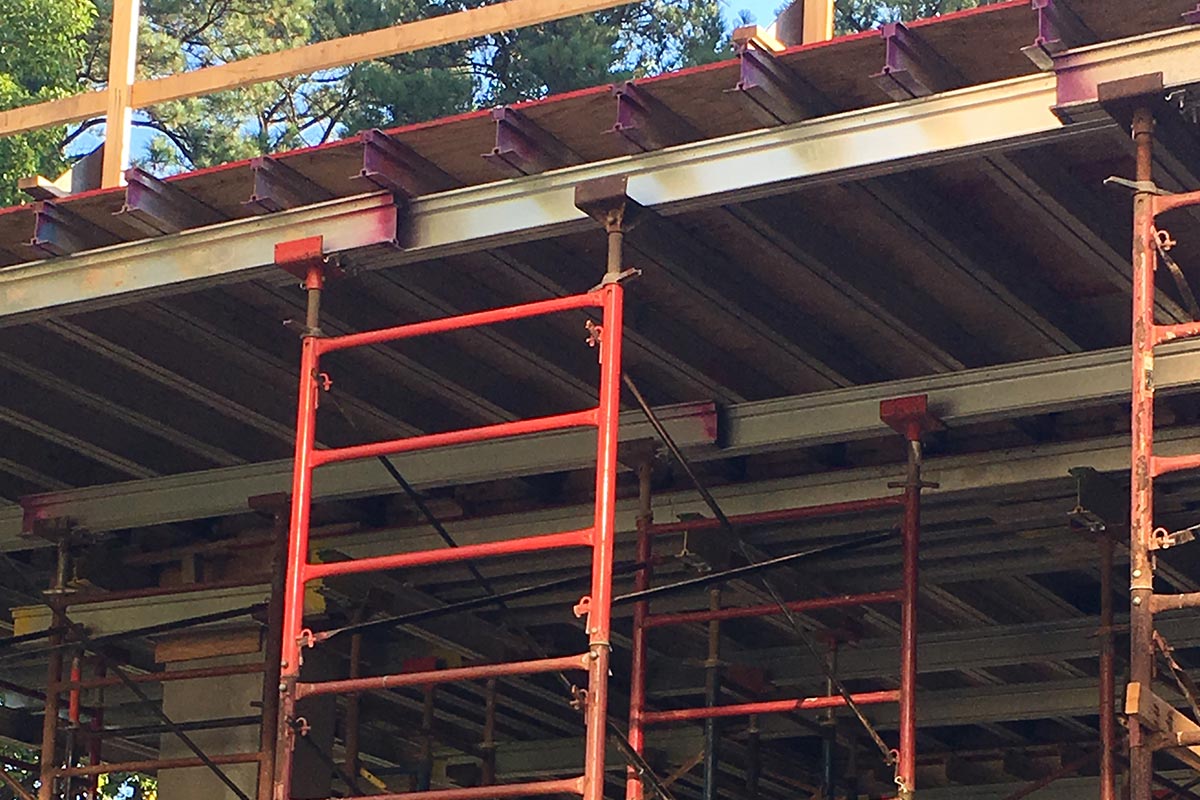
What Is Shoring Equipment?
Definition: Shoring equipment refers to temporary structural support systems used to stabilize buildings, concrete slabs, excavation walls, and formwork during construction, renovation, repair, or demolition. Unlike scaffolding — which provides elevated access and working platforms for workers — shoring is a load-bearing system designed to prevent structural collapse, hold freshly poured concrete while it cures, or maintain stability while permanent load-bearing elements are altered or replaced.
Shoring is required any time a structure, wall, slab, or trench faces a risk of movement or collapse. Common applications include supporting concrete decks during multi-story pours, stabilizing walls during foundation repair, preventing cave-ins during excavation, and providing temporary reinforcement to buildings undergoing structural renovation. The type of shoring system used depends on the load requirements, site conditions, and project scope.
Shoring systems range from simple adjustable post shores used under a single slab to engineered frame shore towers capable of supporting hundreds of thousands of pounds of formwork and wet concrete. Through Scaffold Exchange, you can find vendors across the U.S. who carry shoring equipment and compare their inventory, rental rates, and availability in your area.
Common Types of Shoring Equipment
Shoring systems vary widely in design and load capacity. Understanding the differences helps ensure the right system is selected for the structural demands of the project.
Post Shores (Adjustable Props)
Individual telescopic steel or aluminum posts used to temporarily support concrete slabs, beams, and decks. Easy to adjust to specific heights and reusable across multiple pours. Ideal for light-to-medium-duty residential and commercial applications.
Frame Shore Towers
Scaffold-frame-based shoring towers assembled from walk-through frames, cross braces, and screw jacks. Used to support heavy concrete formwork, elevated slabs, and beams in mid-rise and high-rise construction. High load capacity; compatible with standard scaffolding inventory.
Slab Shoring Systems
Temporary support structures that hold freshly poured concrete slabs until they cure and reach full strength. Typically combine vertical props or frames with horizontal stringers and plywood decking. Widely used in multi-story concrete construction.
Structural / Building Shores
Heavy-duty temporary support systems used to stabilize buildings, walls, and structural elements during renovation, repair, or modification. Common in historic preservation, foundation repair, and load-bearing wall removal projects.
Trench & Excavation Shoring
Systems used to prevent cave-ins and stabilize soil walls in trenches and excavations. Includes hydraulic shoring, trench boxes (shields), and timber shoring. Required by OSHA for all trenches deeper than 5 feet in most soil conditions.
Reshoring
The practice of placing new temporary supports under a recently constructed structural element after original shoring has been removed, redistributing construction loads during multi-story concrete pours until the structure reaches full design strength.
Common Applications & Job Site Uses
Shoring equipment is used across a wide range of construction, renovation, and civil infrastructure projects throughout the United States. It is a critical safety system wherever temporary structural support is required.
Supporting concrete formwork during multi-story slab pours
Stabilizing excavation walls and trenches to prevent cave-ins
Temporary support during load-bearing wall removal or modification
Foundation repair and underpinning on residential and commercial structures
Historic building preservation and structural renovation
Bridge construction and repair — supporting deck formwork
Reshoring during multi-story concrete construction sequencing
Demolition — temporary support to prevent uncontrolled collapse
How Shoring Systems Work
The purpose of every shoring system is the same — transfer loads from a temporarily unsupported structure to a stable foundation — but the method varies by system type.
Assess the Load
A qualified engineer or competent person determines the loads the shoring system must carry — wet concrete weight, construction live loads, wind, and dynamic forces — and selects the appropriate system and configuration.
Prepare the Base
Mudsills, base plates, or other bearing surfaces are placed on stable ground to distribute point loads. The bearing capacity of the substrate must be verified before loading.
Erect the Shore System
Post shores, frame towers, or structural shoring components are installed per the engineered layout, adjusted to the correct height, and braced against lateral movement.
Inspect Before Loading
A competent person inspects the shoring system before any load is applied — verifying plumb, level, bearing contact, and all connections — and at the start of each work shift.
Shoring vs. Related Equipment Types
Shoring is frequently confused with scaffolding, but the two serve fundamentally different purposes. Here is how shoring compares to related equipment categories.
Structural load-bearing support
- Supports structures, slabs, and excavation walls
- Purely a structural safety system
- Not designed as a worker access platform
- Governed by OSHA 29 CFR 1926 Subpart Q (concrete) and Subpart P (excavations)
Worker access and work platform
- Provides elevated platforms for workers and materials
- Walk-through frames can be configured for shoring when engineered
- Not a shoring system unless specifically designed for it
- Governed by OSHA 29 CFR 1926.451
High-load modular system scaffolding
- Used for both access scaffolding and shoring applications
- High load capacity makes them suitable for formwork support
- Must be engineered for shoring use — cannot be assumed
- Popular choice for heavy concrete formwork towers
Custom configuration support
- Can be configured for structural shoring applications
- Maximum flexibility for irregular or custom load paths
- Requires experienced labor and engineering oversight
- Used for building shores and structural stabilization
Find Shoring Equipment Vendors Near You
Use the Scaffold Exchange map to search by location, filter by equipment type, and connect directly with local suppliers who carry shoring equipment and temporary support systems.
OSHA Compliance & Safety Standards
Shoring equipment used on U.S. construction job sites is governed by multiple OSHA standards depending on the application. Concrete formwork shoring falls under 29 CFR 1926 Subpart Q. Excavation and trench shoring falls under 29 CFR 1926 Subpart P, which requires protective systems for all trenches deeper than 5 feet in most soil conditions. All shoring systems must be designed or approved by a qualified person and inspected by a competent person before each use.
- Shoring system designed or approved by a qualified person for the specific loads
- Bearing surface verified for adequate capacity before loading
- All components inspected for damage before each use
- System inspected by a competent person before each work shift
- Trenches deeper than 5 feet protected per OSHA 29 CFR 1926 Subpart P
- Concrete formwork shoring per OSHA 29 CFR 1926 Subpart Q
- Do not exceed the rated load capacity of any shoring component
1926
Subparts P & Q — Excavations & Concrete Construction
OSHA Interpretations & Rulings →