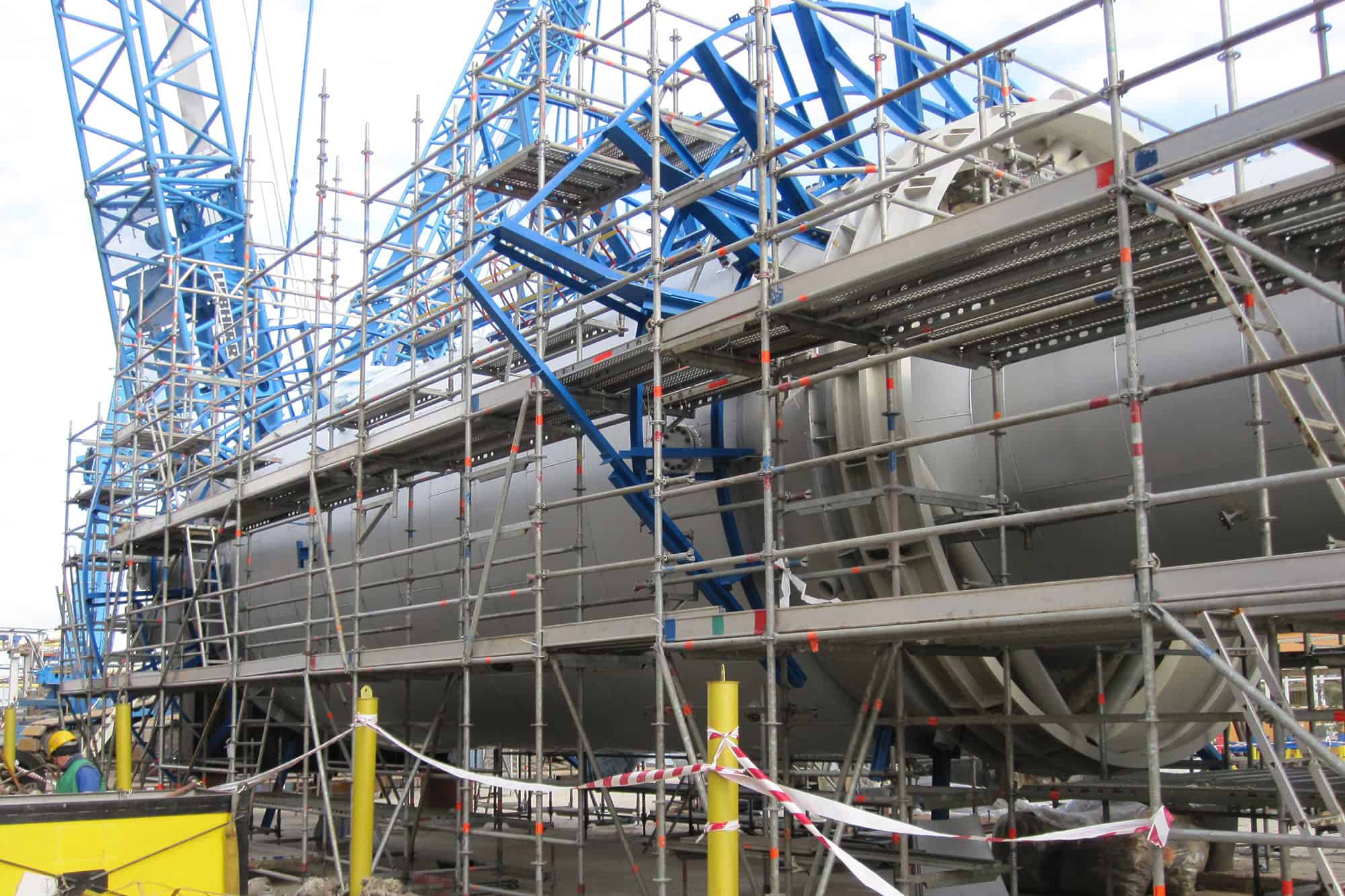
What Are Turnarounds Projects in the Scaffold & Access Context?
Definition: A turnaround — in the scaffold and access context — is a planned, comprehensive shutdown of a process unit or entire facility, most commonly at a refinery, chemical plant, or gas processing facility, during which the unit is taken completely offline so that maintenance, inspection, catalyst change-out, vessel and exchanger overhaul, and capital project tie-ins can be performed across the full scope of process equipment simultaneously — work that cannot be safely or practically performed while the unit is operating. Turnarounds occur on a planned cycle, typically every two to six years depending on the specific process unit and regulatory inspection requirements, and represent the single largest concentrated maintenance event in a process facility's operating cycle, with durations ranging from a few weeks for a single process unit turnaround to two months or more for a full refinery turnaround addressing multiple interconnected units simultaneously. Scaffold demand during a major turnaround can reach hundreds of thousands of square feet of platform area, requiring the largest-scale scaffold mobilization that the industrial sector produces.
The scale and complexity of turnaround scaffold work distinguishes it even from the already intensive demands of single-unit outage scaffold. A full refinery or chemical plant turnaround typically involves multiple process units shut down simultaneously, dozens of scaffold crews working in parallel across the facility, thousands of construction workers from dozens of contractors all requiring coordinated site access and safety management, and a scaffold scope that spans every type of structure in the facility — distillation towers, reactors, heat exchangers, pipe racks, and structural steel — each requiring its own specific scaffold configuration developed during the multi-month turnaround planning process that precedes execution. Turnaround planning typically begins twelve to eighteen months before the turnaround execution date, with the scaffold contractor's scope development, crew commitment, and equipment mobilization plan finalized well in advance of the turnaround's start.
Turnaround scaffold contracts are typically secured through a formal competitive bid process managed by the facility's turnaround planning organization, evaluating contractors on demonstrated turnaround-scale experience, crew and equipment capacity sufficient for the specific turnaround's scope, safety performance record, and schedule reliability track record on comparable previous turnarounds. The financial consequences of turnaround schedule extension are even more significant than for single-unit outages, given the larger scope and the typically higher daily value of process unit downtime at a major refinery or chemical facility — making turnaround scaffold contractor selection one of the most consequential procurement decisions in the facility's entire turnaround planning process. Through Scaffold Exchange, you can find scaffold vendors near you with demonstrated turnaround experience and compare their crew capacity, equipment inventory, and turnaround track record.
How Scaffold Is Delivered on Turnaround Projects
Turnaround scaffold delivery follows an extended planning cycle culminating in an intensive, large-scale execution window, with the scaffold contractor integrated into the facility's overall turnaround management process from the earliest planning stages.
Long-Lead Scope Development & Bid
Twelve to eighteen months before turnaround execution, the facility's turnaround planning organization develops the detailed scaffold scope across every process unit and structure included in the turnaround — informed by historical maintenance data, inspection requirements, and the specific capital project tie-in work planned for the turnaround window. The scaffold scope is competitively bid, with the selected contractor's commitment confirmed well in advance to allow time for crew recruitment and equipment procurement at the scale the turnaround requires.
Detailed Planning & Pre-Turnaround Mobilization
In the months leading up to turnaround execution, the scaffold contractor develops detailed scaffold designs for each work area, confirms crew sourcing and equipment logistics for the turnaround's specific timing, and participates in the facility's turnaround readiness reviews alongside the dozens of other contractors involved in the overall execution plan. In the weeks before execution, equipment and materials are pre-positioned at the facility to the maximum extent the site allows, minimizing the time required to begin productive erection once the turnaround begins.
Large-Scale Parallel Execution
During turnaround execution, dozens of scaffold crews work simultaneously across every process unit included in the turnaround scope, supporting the parallel work of the dozens of maintenance, inspection, and construction contractors performing the turnaround's full scope. Scaffold scope frequently grows during execution as inspection findings reveal additional work, requiring the contractor's crew and equipment surge capacity to absorb scope growth without disrupting the broader turnaround schedule — a defining capability requirement at this scale of work.
Coordinated Demobilization & Unit Restart
As each process unit completes its turnaround scope, scaffold is dismantled in the sequence required to support that unit's restart, while scaffold supporting other units still in turnaround remains active elsewhere on the site. The final phase of a major turnaround typically involves the most intensive demobilization activity of the entire project, with multiple units restarting on a staggered schedule and the scaffold contractor managing dozens of simultaneous dismantling operations to clear restart-critical equipment in the required sequence.
Key Scaffold Considerations for Turnaround Projects
Turnaround scaffold work operates at a scale and complexity that requires specific capabilities beyond what general industrial or even single-unit outage scaffold experience provides.
Turnaround-Scale Equipment Inventory
Major turnarounds require scaffold equipment inventory measured in hundreds of thousands of square feet of platform area — far beyond what most contractors maintain as standing inventory. Turnaround scaffold contractors typically draw on national or international equipment networks, rental fleet sharing arrangements, and significant pre-turnaround procurement to assemble the equipment scale a major turnaround requires.
Mass Workforce Mobilization
Turnaround scaffold crews can number in the hundreds of erectors for a major refinery turnaround — requiring the contractor to recruit, mobilize, house, and manage a workforce far larger than their steady-state operations, often drawing workers from across the country or internationally for the turnaround's duration. Workforce mobilization at this scale requires logistics planning — housing, transportation, and per diem management — well beyond standard scaffold project staffing.
Multi-Contractor Site Coordination
A major turnaround involves dozens of specialty contractors — mechanical, electrical, instrumentation, insulation, painting, scaffold, and many others — all working simultaneously across the same facility, requiring the scaffold contractor's operations to integrate seamlessly with the facility's overall turnaround coordination structure, including shared safety management, common site access protocols, and coordinated equipment laydown areas across the full contractor population.
Long-Lead Planning Discipline
The twelve-to-eighteen-month planning lead time typical of major turnarounds requires sustained scaffold engineering and planning effort well in advance of execution — developing scaffold designs for every work area, confirming crew and equipment commitments, and participating in the facility's progressive turnaround readiness review process throughout the planning period rather than concentrating planning effort in the weeks before execution.
Scope Growth Absorption
Turnaround scope growth from inspection findings is a near-universal feature of major turnarounds — vessels and equipment opened up for the first time in years routinely reveal maintenance needs beyond what pre-turnaround inspection could identify. Scaffold contractors must build contingency crew and equipment capacity into their turnaround commitment specifically to absorb this scope growth without becoming the constraint on the facility's overall turnaround schedule.
Schedule Performance & Financial Stakes
The financial consequence of turnaround schedule extension at a major refinery or chemical facility — measured in lost production value across the full facility or process train — is typically the single largest financial risk in the facility's annual operating plan, making scaffold contractor schedule reliability an evaluation criterion of comparable weight to safety performance in turnaround contractor selection.
Common Turnaround Project Scenarios Using Scaffold
Turnaround scaffold supports comprehensive shutdown maintenance across the major process industry facility types where periodic full-unit or full-facility shutdowns are an inherent part of the asset's operating and regulatory cycle.
Refinery turnarounds — comprehensive shutdown maintenance of crude units, cat crackers, hydrotreaters, and associated process equipment on a multi-year planned cycle
Chemical plant turnarounds — facility-wide shutdown maintenance of process units, reactors, and associated infrastructure at petrochemical and specialty chemical facilities
Gas processing plant turnarounds — comprehensive maintenance shutdowns of gas processing trains, compression systems, and associated process infrastructure
Catalytic cracker and catalyst change-out turnarounds — scaffold supporting the intensive vessel access and equipment overhaul required during catalyst replacement turnarounds
Capital project tie-in turnarounds — turnarounds scheduled specifically to integrate new capital project equipment into an operating process unit during the planned shutdown window
Pressure vessel and exchanger inspection turnarounds — regulatory-driven turnarounds timed to satisfy mandatory periodic inspection requirements for pressure equipment
LNG facility turnarounds — comprehensive maintenance shutdowns of liquefaction trains and associated cryogenic process equipment
Pulp and paper mill turnarounds — comprehensive shutdown maintenance of digester, recovery boiler, and associated process equipment at large mill facilities
Turnarounds Projects vs. Other Project Categories on Scaffold Exchange
Turnarounds projects are the largest-scale planned shutdown category — here is how they compare to the related project categories.
Comprehensive full-facility planned shutdown
- Most commonly associated with refineries, chemical plants, and gas processing facilities
- Largest-scale scaffold mobilization in the industrial sector — hundreds of thousands of sq ft
- Twelve-to-eighteen-month planning lead time before execution
- Multiple process units shut down and addressed simultaneously
Single-unit planned shutdown
- Most commonly associated with power generation plant single-unit maintenance scheduling
- Smaller scope than a full turnaround — focused on one boiler, turbine, or generator
- See the Outages Projects industry page for the single-unit shutdown scope
Refinery facility type
- Turnarounds are the primary major scaffold demand driver at refinery facilities
- Refineries industry page covers the facility-type considerations beyond turnaround scheduling
- See the Refineries industry page for refinery facility scaffold detail
Broader industrial facility scaffold
- Turnarounds are the most intensive demand pattern within the broader industrial projects category
- Industrial projects also covers steady-state maintenance and new facility construction
- See the Industrial Projects industry page for the full industrial scaffold scope
Find Turnaround Project Scaffold Vendors Near You
Use the Scaffold Exchange map to search by location, filter by project type, and connect directly with local and national scaffold contractors who have demonstrated turnaround-scale experience, mass workforce mobilization capability, and turnaround schedule performance track records.
Compliance & Site Safety Considerations
Scaffold during turnaround projects is governed by OSHA 29 CFR 1926 Subpart L, with the unprecedented scale and contractor density of major turnarounds creating compliance management demands that exceed even single-unit outages. With dozens of scaffold installations active simultaneously across a facility hosting hundreds or thousands of workers from dozens of contractors, the scaffold contractor's compliance management system must sustain consistent competent person coverage, inspection discipline, and training verification across an installation count and workforce scale that strains even well-resourced organizations. OSHA's multi-employer worksite doctrine is particularly significant on turnarounds, where the facility operator (host employer), the turnaround management contractor (controlling employer), and the scaffold subcontractor's roles and responsibilities must be clearly defined within the facility's overall turnaround safety management system — a structure that is typically far more elaborate than on smaller projects, often including a dedicated turnaround safety organization, daily safety stand-downs, and a unified incident reporting and investigation process across all contractors. Process Safety Management requirements under OSHA 1910.119 apply throughout the turnaround for any equipment not yet fully isolated, and the facility's management of change procedures govern any modification to the planned turnaround scope, including scaffold scope changes arising from inspection findings. The mass mobilization of surge workforce for a major turnaround creates significant training verification demands — facilities and turnaround management contractors should require documented confirmation that every scaffold worker, regardless of which contractor or labor source supplied them, holds current and verified OSHA 1926.454 training before facility access.
- Competent person coverage and inspection discipline sustained across the full scale of simultaneous turnaround scaffold installations
- Multi-employer controlling employer relationships clearly defined within the turnaround's overall safety management organization
- Daily safety coordination — stand-downs, permit reviews, area access confirmations — integrated with the facility's turnaround safety organization
- Process Safety Management coordination maintained per OSHA 1910.119 for equipment not yet isolated throughout the turnaround duration
- Management of change process applied to scaffold scope growth from inspection findings — changes documented and reviewed before implementation
- Surge workforce training records verified for every scaffold worker, regardless of contractor or labor source, before facility access
- Incident reporting and investigation process integrated with the facility's unified turnaround incident management system
- Progressive demobilization sequence coordinated across multiple simultaneously restarting process units
1926 Subpart L
& 1910.119
Scaffolds & Process Safety Management
OSHA Interpretations & Rulings →