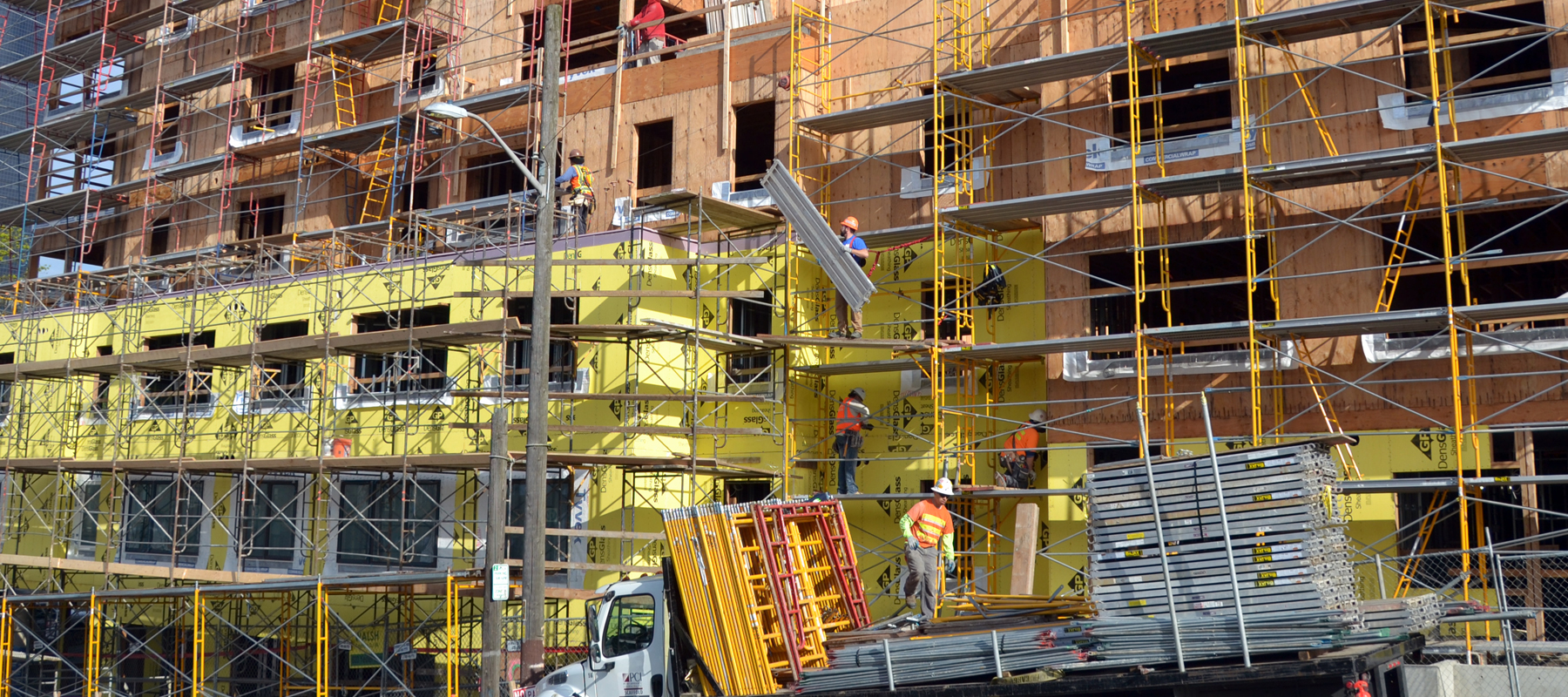
What Are Residential Clients in the Scaffold & Access Context?
Definition: Residential clients — in the scaffold and access context — are homeowners, residential property managers, and small contractors serving single-family homes, townhouses, and small multi-family residential buildings who require scaffold for exterior renovation, maintenance, and construction work. Residential scaffold engagements are characterized by their smaller scale relative to commercial and industrial work — typically a single building footprint requiring days to a few weeks of scaffold rather than months or years — and by the direct relationship between the homeowner and the scaffold vendor, often without the intermediary general contractor, project manager, or facilities team present on larger commercial and industrial projects. The homeowner is frequently making their first scaffold purchasing decision, has limited knowledge of scaffold systems and OSHA requirements, and is evaluating the scaffold vendor primarily on price, availability, and the vendor's ability to clearly explain the process — distinguishing residential client service expectations from the more technically sophisticated commercial and industrial procurement processes covered elsewhere in this resource library.
Residential scaffold work spans a defined set of common applications: exterior painting and staining, requiring scaffold around all or part of the home's exterior to provide stable working access for the painting contractor; roofing and gutter work, requiring scaffold or rolling towers to access roof edges and eave-level work safely; siding, stucco, and exterior cladding replacement, requiring scaffold coverage of the affected wall sections; window and door replacement, requiring scaffold at the specific opening locations; and chimney and masonry repair, requiring scaffold access to typically the highest point of the residential structure. The scaffold scope for these applications is generally smaller and simpler than commercial or industrial scaffold — frame and brace systems dominate the residential market due to their widespread availability, lower cost, and familiarity to the local rental houses serving residential customers.
The residential scaffold market is served primarily by local and regional rental houses and small scaffold companies whose business model and pricing structure are oriented toward individual homeowner transactions rather than large institutional procurement processes. Many residential scaffold engagements are arranged through the renovation contractor — the painter, roofer, or siding contractor — who includes scaffold as a line item in their project quote and either subcontracts the scaffold provision or passes the homeowner's contact information to a scaffold vendor directly. Homeowners engaging scaffold directly, without an intermediary contractor, benefit from understanding the basic scaffold options, safety requirements, and typical pricing structure before contacting a vendor. Through Scaffold Exchange, you can find scaffold vendors near you who regularly serve residential clients and compare their pricing, availability, and service approach.
How Scaffold Is Delivered for Residential Clients
Residential scaffold engagements follow a simpler, faster-moving process than commercial or industrial procurement — reflecting the smaller scale, shorter duration, and more direct vendor relationship typical of homeowner projects.
Scope Definition & Quote Request
The homeowner — or their renovation contractor on their behalf — describes the work to be performed and the areas of the home requiring scaffold access. Most residential scaffold vendors can provide a quote from a phone description or a few photographs of the home's exterior without requiring a formal site visit for straightforward single-family residential projects, though a site visit is advisable for homes with unusual access constraints, sloped sites, or complex roof geometry.
Scheduling & Delivery
The vendor schedules delivery and erection based on the homeowner's project timeline and the contractor's availability to begin the work supported by the scaffold. Residential scaffold deliveries are typically completed by a small truck and a crew of two to four erectors, with most single-family residential scaffold scopes erected within a single day. The homeowner should confirm site access — driveway clearance, gate widths, and any landscaping that needs protection — with the vendor before the delivery date.
Use Period & Homeowner Coordination
During the scaffold's active period — typically days to a few weeks for most residential projects — the homeowner coordinates with the scaffold vendor regarding any concerns about the scaffold's condition, security around the property, or scheduling questions about the rental period. Most residential scaffold rental agreements specify the rental period and the procedure for extending it if the renovation contractor's work takes longer than originally anticipated.
Dismantling & Property Reinstatement
At the end of the rental period, the scaffold is dismantled and removed, and the property — landscaping, paving, and any surfaces affected by the scaffold footprint — is restored to its pre-erection condition. The homeowner should inspect the property after dismantling and report any concerns to the vendor promptly, since residential rental agreements typically specify a limited window for reporting damage claims.
Key Scaffold Considerations for Residential Clients
Residential scaffold engagements involve a distinct set of practical considerations centered on cost, simplicity, and homeowner understanding rather than the technical and commercial complexity of larger projects.
Project Size & Duration
Residential scaffold scope is typically limited to a single home's exterior or a specific section of it, with rental periods ranging from a few days for a small job to several weeks for a full exterior renovation. This smaller scale means residential scaffold pricing, vendor selection, and logistics are simpler than the multi-phase, multi-month engagements typical of commercial and industrial scaffold work.
Pricing & Budget Sensitivity
Residential homeowners are typically more price-sensitive and budget-constrained than commercial or industrial clients, and scaffold cost is frequently a meaningful line item within the homeowner's overall renovation budget. Vendors serving the residential market typically offer transparent, simple pricing structures — often flat rates for common configurations like a standard two-story home exterior — that homeowners can understand without scaffold industry expertise.
Residential Site Access Constraints
Residential properties present access constraints distinct from commercial sites — narrow driveways, gates, landscaping, fences, and neighboring property boundaries all affect the delivery vehicle and erection logistics. Confirming site access details before the delivery date — driveway width, overhead clearances from trees or power lines, and gate dimensions — prevents delivery delays and additional charges for access difficulties discovered on arrival.
Homeowner Safety Awareness
Homeowners frequently lack familiarity with OSHA scaffold requirements and may not appreciate the safety implications of common requests — using the scaffold themselves without training, allowing children or pets near the scaffold structure, or requesting modifications to the erected scaffold without the vendor's involvement. Vendors serving residential clients should clearly communicate the basic safety boundaries — who can use the scaffold, what modifications are not permitted, and what to do if a problem with the scaffold is observed.
Property Security During the Rental Period
An erected scaffold on a residential property can provide unintended access to upper floors and windows, creating a security consideration that homeowners should discuss with their vendor and consider when planning their property's security during the construction period — particularly for vacant properties or extended rental periods. Some vendors offer anti-climb guards or other access deterrent measures for residential scaffold installations.
Coordination with the Renovation Contractor
Many residential scaffold engagements are arranged through the painting, roofing, or siding contractor performing the actual renovation work, who includes scaffold provision in their overall project quote. Homeowners should understand whether scaffold is being subcontracted by their renovation contractor or arranged directly, and confirm that the responsible party for scaffold safety, inspection, and OSHA compliance is clearly established before work begins.
Common Residential Project Types Using Scaffold
Residential scaffold supports the common exterior maintenance and renovation activities that make up the bulk of homeowner-driven construction projects.
Exterior house painting and staining — full or partial home exterior repainting requiring stable, code-compliant access for the painting contractor
Roofing replacement and repair — scaffold or rolling tower access to roof edges, eaves, and gutters for safe roofing and gutter work
Siding, stucco, and exterior cladding replacement — scaffold coverage of the affected wall sections for residing and recladding projects
Window and door replacement — scaffold access at specific window or door openings, particularly on upper floors
Chimney repair and repointing — scaffold access to the typically highest point of the residential structure for masonry repair work
Home addition and second-story construction — scaffold supporting framing, exterior finishing, and roofing work on home expansion projects
Multi-family residential building exterior renovation — scaffold for townhouse, duplex, and small apartment building exterior maintenance and renovation
Gutter cleaning and exterior maintenance — short-duration scaffold or rolling tower rental for periodic home maintenance access
Residential Clients vs. Other Project Categories on Scaffold Exchange
Residential clients are one of several project type categories that shape the scaffold scope and contractor requirements — here is how residential work compares to the related categories.
Homeowner-driven exterior renovation & maintenance
- Smaller scale — days to a few weeks of scaffold for a single home or building
- Direct homeowner relationship — often without an intermediary project manager
- Price-sensitive, simplicity-focused service expectations
- Frame and brace scaffold dominates due to availability and cost
General renovation & restoration scaffold
- Residential renovation is a subset of the broader renovation projects category
- Renovation projects category spans residential, commercial, and institutional work
- See the Renovation Projects industry page for the dedicated renovation scope
Business-occupied real estate
- Multi-family residential at larger scale shares characteristics with commercial projects
- Commercial work involves more formal procurement and intermediary management roles
- See the Commercial Projects industry page for business-occupied property scaffold
Public sector procurement & compliance
- Public housing renovation programs bring government procurement requirements to residential-scale work
- HUD-funded residential renovation requires the licensing and documentation standards of government projects
- See the State and Government Projects industry page for public sector scaffold requirements
Find Scaffold Vendors for Residential Clients Near You
Use the Scaffold Exchange map to search by location, filter by project type, and connect directly with local scaffold vendors who regularly serve homeowners and residential renovation contractors.
Compliance & Site Safety Considerations
Scaffold on residential properties is governed by the same OSHA 29 CFR 1926 Subpart L requirements that apply to all construction scaffold — the residential context does not reduce or exempt the applicable OSHA standards. The scaffold contractor's competent person is responsible for designing, erecting, and inspecting the scaffold to OSHA-compliant standards regardless of the project's small scale, and homeowners should not assume that a residential scaffold installation is exempt from the same height-to-base ratio limits, tie requirements, guardrail thresholds, and inspection obligations that apply to larger commercial and industrial scaffold. A common compliance risk specific to residential projects is the homeowner or an unauthorized person — a family member, a different trade not associated with the original scaffold contract, or a neighbor — using the scaffold without training and without the competent person's authorization. The scaffold contractor should clearly communicate to the homeowner who is authorized to use the scaffold and the consequences of unauthorized use or modification. Where the renovation contractor — rather than the homeowner — is the party engaging the scaffold vendor, the contract should clearly establish which party holds the OSHA compliance responsibility for worker training and scaffold use during the renovation work, since multiple trades (painter, roofer, sider) may use the same scaffold installation sequentially on a single residential project.
- Scaffold designed, erected, and inspected to OSHA 1926.451 standards regardless of the residential project's small scale
- Competent person designated by the scaffold contractor for the erection and inspection of every residential scaffold installation
- Handover certificate or equivalent confirmation issued before the renovation contractor's workers access the scaffold
- Homeowner clearly informed of who is authorized to use the scaffold and the consequences of unauthorized access or modification
- All trades using the scaffold during a multi-phase residential renovation confirmed trained per OSHA 1926.454 before each trade accesses the structure
- Site access constraints — driveway width, overhead clearances, landscaping — assessed before delivery to confirm safe vehicle access and unloading
- Local permit requirements confirmed for residential scaffold — some jurisdictions require permits for scaffold above a defined height or duration even on single-family properties
- Property security considerations discussed with the homeowner where the erected scaffold creates unintended building access during the rental period
1926 Subpart L
Scaffolds — General Requirements & System Standards
OSHA Interpretations & Rulings →