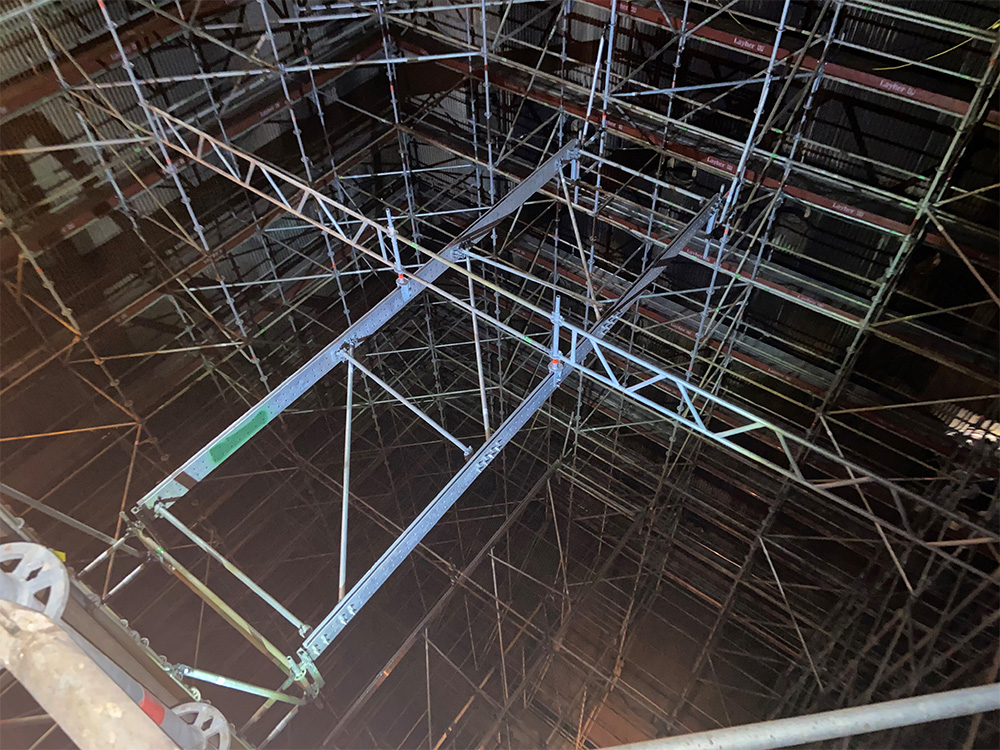
What Are Outages Projects in the Scaffold & Access Context?
Definition: An outage — in the scaffold and access context — is a planned, scheduled period during which a power generation unit, process unit, or industrial system is taken offline for maintenance, inspection, repair, or upgrade work that requires the equipment to be de-energized, depressurized, or otherwise removed from service. Outages are most closely associated with the power generation industry — where they are scheduled around boiler, turbine, and generator maintenance cycles — but the term and the project delivery pattern apply equally to planned shutdowns at any facility where a unit or system must be temporarily removed from service for maintenance not achievable while operating. Scaffold for outage work must be mobilized rapidly at the start of the outage window, support multiple trades working simultaneously across the de-energized equipment, and be fully demobilized before the unit returns to service — with the scaffold contractor's performance directly affecting whether the outage completes on its planned schedule or extends, with significant financial consequences for every day of extended outage duration.
Outage scaffold demand is fundamentally different from steady-state industrial maintenance scaffold in both scale and time pressure. A planned outage compresses what might otherwise be months of distributed maintenance scaffold work into a defined window of days to a few weeks, during which the scaffold contractor must mobilize a crew and equipment inventory sized for the full outage scope, erect scaffold simultaneously across multiple work areas to support the parallel work of boiler maintenance crews, turbine technicians, instrumentation specialists, and other trades, and demobilize promptly as each work area is completed so the unit can be restored to service. The financial stakes of outage schedule performance are significant — a power generation unit offline for maintenance is not generating revenue, and the cost of extended outage duration, measured in lost generation revenue and replacement power costs, frequently dwarfs the scaffold contract value itself, making scaffold schedule reliability a primary selection criterion for outage scaffold contractors.
Outage scaffold work requires the contractor to demonstrate surge capacity — the equipment inventory and crew mobilization capability to deliver the full outage scope within the compressed window — alongside the engineering capability to design scaffold for the specific boiler, turbine, generator, and balance-of-plant access requirements that power generation outages demand. Outage scaffold contracts are typically secured well in advance of the outage date through a competitive bid process, with the contractor's outage track record, crew availability commitments, and equipment capacity for the specific outage scope being primary evaluation criteria. Through Scaffold Exchange, you can find scaffold vendors near you with outage project experience and compare their crew capacity, equipment inventory, and outage performance track record.
How Scaffold Is Delivered for Outage Projects
Outage scaffold delivery follows a compressed, intensive sequence driven by the outage schedule — pre-outage planning, rapid mobilization, parallel multi-area erection and dismantling, and disciplined demobilization that supports the unit's return to service on schedule.
Pre-Outage Planning & Scope Confirmation
Months before the outage date, the scaffold contractor works with the facility's outage planning team to define the full scope — every work area requiring scaffold access, the specific scaffold configuration each maintenance activity requires, the load classification needed, and the sequence in which scaffold areas must be erected and dismantled to align with the overall outage work schedule. This planning phase produces a detailed scaffold work plan integrated with the facility's master outage schedule.
Pre-Outage Mobilization
In the days immediately before the outage begins, the scaffold contractor pre-positions equipment, materials, and crew at the facility — confirming all required permits, area access, and site orientation are complete so that scaffold erection can begin the moment the unit is taken offline and the work areas are released for access. Pre-positioning equipment and material as close to the work areas as the facility allows minimizes the time lost to material handling once the outage clock starts.
Parallel Multi-Area Erection & Maintenance Support
Once the outage begins and work areas are released, multiple scaffold crews erect scaffold simultaneously across the boiler, turbine, generator, and balance-of-plant work areas — supporting the parallel work of the multiple maintenance trades performing the outage scope. Throughout the outage, the scaffold contractor responds to scope changes as inspection findings reveal additional work, modifies scaffold configurations as the maintenance scope evolves, and maintains inspection and compliance documentation across the full multi-area scaffold installation.
Progressive Demobilization & Unit Restart Support
As each work area's maintenance scope is completed, scaffold serving that area is dismantled promptly to support the facility's progressive restart sequence — scaffold removal from critical path equipment is often required before the unit can begin the restart and commissioning process. The scaffold contractor's demobilization performance in the final days of the outage is frequently the most schedule-critical phase of the entire engagement, since any delay in clearing scaffold from restart-critical equipment directly delays the unit's return to service.
Key Scaffold Considerations for Outage Projects
Outage scaffold work places specific demands on capacity, schedule reliability, and scope flexibility that distinguish it from steady-state maintenance and even from other industrial project work.
Surge Crew & Equipment Capacity
Outage scaffold demand requires a step-change in crew and equipment capacity compared to the facility's steady-state maintenance scaffold needs — the contractor must demonstrate the ability to mobilize sufficient crew and inventory to deliver the full outage scope within the compressed window, often by drawing on regional or national resources beyond what a single local crew could provide.
Schedule Reliability & Critical Path Management
Outage scaffold is almost always on the critical path of the overall outage schedule for at least some portion of the work — schedule reliability, demonstrated through the contractor's track record on previous outages, is frequently weighted as heavily as price in outage scaffold contractor selection, because the financial consequence of an outage extension caused by scaffold delays far exceeds the scaffold contract's value.
Scope Change Responsiveness
Outage maintenance scope frequently evolves as inspection findings during the outage reveal additional repair work not identified in the pre-outage planning — the scaffold contractor must be able to respond quickly to scope additions and configuration changes mid-outage without disrupting the broader schedule, requiring contingency crew capacity and a streamlined change management process integrated with the outage's overall change control system.
Multi-Crew, Multi-Area Coordination
Outages involve dozens to hundreds of workers across multiple trades — boiler maintenance, turbine technicians, instrumentation, insulation, painting, electrical — all working simultaneously across the facility, with scaffold installations shared by multiple trades in sequence or in parallel. Coordinating scaffold access, modification requests, and inspection across this concentrated multi-trade environment is a defining capability requirement for outage scaffold management.
Disciplined Demobilization
Progressive scaffold removal as each work area is completed — rather than a single mass dismantling at the end of the outage — is essential to supporting the facility's restart sequence, since equipment needed for early restart steps must be cleared of scaffold before later-completing areas. Demobilization sequencing must be planned and managed with the same rigor as the erection mobilization.
Advance Contractor Booking
Outage scaffold contracts are typically secured many months in advance of the outage date, reflecting both the planning lead time required to develop a detailed scaffold scope and the competitive demand for scaffold contractor surge capacity during regional outage seasons when multiple facilities schedule outages in overlapping windows.
Common Outage Project Scenarios Using Scaffold
Outage scaffold is used wherever a power generation unit or industrial system is taken offline for planned maintenance that requires elevated access support for the maintenance crews performing the work.
Coal and gas-fired power plant boiler outages — scaffold supporting boiler tube inspection, repair, and replacement work inside and around the boiler structure
Steam turbine and generator outages — scaffold supporting turbine maintenance, generator rewind, and associated balance-of-plant work
Nuclear plant refueling outages — highly regulated, schedule-critical scaffold supporting reactor maintenance and refueling activities within strict radiological control protocols
Combined cycle plant outages — coordinated scaffold for gas turbine, heat recovery steam generator, and steam turbine maintenance on combined cycle power facilities
Cooling tower and condenser maintenance outages — scaffold supporting major mechanical maintenance on plant cooling systems during planned outage windows
Pollution control equipment outages — scaffold for scrubber, baghouse, and emissions control system maintenance requiring unit shutdown
Substation and transmission equipment outages — scaffold supporting electrical infrastructure maintenance during planned grid maintenance windows
Industrial process unit outages — scaffold for planned maintenance shutdowns of individual process units within larger industrial facilities, distinct from full-facility turnarounds
Outages Projects vs. Other Project Categories on Scaffold Exchange
Outages projects are a closely related but distinct category from turnarounds and broader industrial maintenance — here is how outage work compares to the related categories.
Planned unit shutdown for maintenance
- Most commonly associated with power generation plant maintenance scheduling
- Days to a few weeks duration — compressed, schedule-critical mobilization
- Financial stakes driven by lost generation revenue during the offline period
- Single unit or system scope, distinct from full-facility turnarounds
Comprehensive full-facility shutdown maintenance
- Broader, often facility-wide planned shutdown — typically associated with refineries and chemical plants
- Larger scope and longer duration than a single-unit outage
- See the Turnarounds Projects industry page for the dedicated full-facility shutdown scope
Power generation facility type
- Outages are the primary scaffold demand driver at power generation facilities
- Power Plants industry page covers the facility-type considerations beyond outage scheduling
- See the Power Plants industry page for power generation facility scaffold detail
Broader industrial facility scaffold
- Outages are one demand pattern within the broader industrial projects category
- Industrial projects also covers steady-state maintenance and new facility construction
- See the Industrial Projects industry page for the full industrial scaffold scope
Find Outage Project Scaffold Vendors Near You
Use the Scaffold Exchange map to search by location, filter by project type, and connect directly with local scaffold contractors who have demonstrated outage scaffold experience, surge crew capacity, and schedule performance track records.
Compliance & Site Safety Considerations
Scaffold during outage projects is governed by OSHA 29 CFR 1926 Subpart L, with the intensity and pace of outage work creating specific compliance management demands. The high crew density and parallel multi-area work typical of outages requires the scaffold contractor to sustain rigorous competent person coverage and inspection discipline across multiple simultaneous installations — the schedule pressure that defines outage work must not compromise the inspection and handover certification requirements that apply regardless of project pace. Lockout/tagout procedures under OSHA 1926.417 are central to outage work, since the entire premise of an outage is that equipment has been de-energized and isolated for maintenance — scaffold erection and use around equipment in a lockout/tagout state must be coordinated with the facility's isolation verification process to confirm the equipment remains safely isolated throughout the scaffold's active period. Nuclear plant outages add radiological protection requirements under 10 CFR Part 20 and facility-specific radiation protection programs that govern scaffold work in or near radiologically controlled areas, requiring scaffold crews to hold radiation worker training and comply with dose monitoring and contamination control procedures beyond standard OSHA requirements. The rapid pace of outage mobilization and demobilization increases the risk of training record gaps for surge crew members brought in specifically for the outage — facilities and scaffold contractors must confirm that every worker, including temporary surge crew, holds current and verified OSHA 1926.454 training before accessing any outage scaffold.
- Competent person coverage maintained across all simultaneous outage scaffold installations — schedule pressure does not reduce inspection rigor
- Lockout/tagout isolation verified for equipment in the work area before scaffold erection begins and confirmed maintained throughout the scaffold's active period per OSHA 1926.417
- Radiological protection requirements confirmed and complied with for nuclear plant outages — radiation worker training, dose monitoring, and contamination control per 10 CFR Part 20
- Surge crew workers' OSHA 1926.454 training records verified before site access — temporary outage crew held to the same training standard as the contractor's permanent crew
- Permit-to-work authorization confirmed current for each scaffold work area before erection or modification proceeds
- Scope change management process integrated with the outage's overall change control system — mid-outage scaffold modifications documented and reviewed
- Progressive demobilization sequence coordinated with the facility's restart schedule — scaffold cleared from restart-critical equipment in the required sequence
- Handover certificates issued for each scaffold area before maintenance crews access it, even within the compressed outage timeline
1926.417
Lockout/Tagout & Scaffold Requirements During Outages
OSHA Interpretations & Rulings →